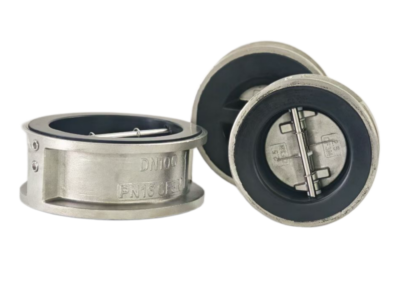
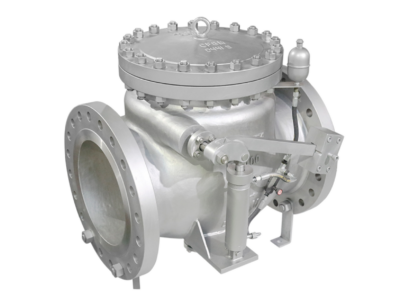
Cryogenic Service Spring-Assisted Lift Check Valve
Description
Technical Data Sheet
Cryogenic Service · Spring‑Assisted Lift Check Valve
Product: Cryogenic Spring‑Assisted Lift Check Valve
Model: [To be specified]
1. Product Description
This spring‑assisted lift check valve is specifically designed for cryogenic service. The disc operates under the combined action of spring force and line pressure. Under forward flow, the disc lifts when the differential pressure overcomes the spring force. When forward flow decreases or a reverse flow tendency occurs, the spring force rapidly assists disc closure, ensuring tight shut‑off and preventing backflow and water hammer. This valve is widely used in LNG, liquid nitrogen, liquid oxygen, liquid hydrogen, and other cryogenic media systems.
2. Main Technical Parameters
| Parameter | Value / Description |
|---|---|
| Nominal Size | [As required, e.g., ½” ~ 12″ / DN15 ~ DN300] |
| Pressure Class | Class 150 ~ Class 2500 (depending on service) |
| End Connection | Flanged (RF / RTJ), Socket Weld (SW), or Butt Weld (BW) |
| Body Construction | Lift type, spring‑assisted closure, piston or ball type disc |
| Temperature Range | –196°C ~ +80°C (LNG / liquid nitrogen) Optional –269°C (liquid hydrogen) grade |
| Applicable Media | LNG, liquid nitrogen, liquid oxygen, liquid hydrogen, ethylene, propane, etc. |
| Flange Standard | ASME B16.5 / ASME B16.47 (per pressure class) |
| Face‑to‑Face | ASME B16.10 / API 6D |
3. Bill of Materials (Typical)
The following materials are typical for cryogenic service and may be adjusted based on actual operating temperature and service conditions.
| No. | Part Name | Standard Material (Cryogenic Grade) | Optional Material |
|---|---|---|---|
| 1 | Body | A182 F316 / CF8M (Stainless Steel) | A182 F304, CF3M, Duplex |
| 2 | Disc | A182 F316 (solution annealed) | 17‑4PH, Monel K500 |
| 3 | Seat | Metal‑seated (hardfaced) | PCTFE / PTFE soft seat (for tighter shut‑off) |
| 4 | Spring | Inconel X‑750 / 718 | 17‑7PH, Hastelloy C‑276 |
| 5 | Bonnet / Extended Bonnet | A182 F316 (lengthened neck) | A350 LF2 (low‑temperature carbon steel) |
| 6 | Packing | Flexible graphite + anti‑extrusion rings | PTFE (for temperatures above –196°C) |
| 7 | Body Gasket | Spiral wound (SS + graphite) | Metal ring gasket (RTJ) |
| 8 | Fasteners | A320 L7 / A193 B8 (cryogenic suitable) | A194 8 / A194 4 |
4. Key Features
4.1 Spring‑Assisted Closure
-
An internal spring provides initial closing force, ensuring rapid disc reseating even under low or zero differential pressure.
-
Spring material (Inconel X‑750) maintains elasticity at cryogenic temperatures down to –196°C.
-
Effectively reduces reverse flow velocity and mitigates water hammer.
4.2 Extended Bonnet (Cryogenic Neck)
-
The lengthened bonnet keeps the packing area away from the cryogenic zone, preventing packing failure at low temperatures.
-
Protects operators from freeze burns and prevents stem icing.
4.3 Metal or Soft Seating Options
-
Metal‑seated (Stellite® hardfacing): Wear‑resistant, erosion‑resistant, suitable for abrasive media or frequent operation.
-
Optional PCTFE / PTFE soft seat: Provides bubble‑tight shut‑off for applications requiring zero leakage.
4.4 Anti‑Gall & Guided Design
-
Precision‑guided disc and body mating surfaces ensure proper alignment and reliable sealing at low temperatures.
-
Designed to prevent galling and sticking under cryogenic conditions.
4.5 Low Pressure Drop
-
Streamlined flow path minimizes pressure loss and accommodates high flow velocities.
5. Dimensions & Weight (Reference)
Typical dimensions for Class 1500 cryogenic lift check valves. Extended bonnet height varies with minimum design temperature. Final dimensions to be confirmed from certified GA drawings.
| Size | Face‑to‑Face (L) | Bonnet Extension (H_ext) | Overall Height (H) | Approx. Weight |
|---|---|---|---|---|
| 1″ (DN25) | 216 mm | 150 – 250 mm | 350 – 450 mm | 8 – 12 kg |
| 2″ (DN50) | 292 mm | 150 – 250 mm | 400 – 550 mm | 18 – 28 kg |
| 3″ (DN80) | 356 mm | 200 – 300 mm | 500 – 650 mm | 35 – 50 kg |
| 4″ (DN100) | 432 mm | 200 – 300 mm | 600 – 750 mm | 55 – 80 kg |
| 6″ (DN150) | 559 mm | 250 – 350 mm | 750 – 950 mm | 100 – 150 kg |
Note: Values above are for reference. Face‑to‑face dimensions and weights for Class 150, Class 600, and Class 2500 shall be determined per applicable standards.
6. Design & Manufacturing Standards
| Standard | Description |
|---|---|
| Design | API 6D, ASME B16.34, BS 1868 |
| Pressure‑Temperature Rating | ASME B16.34 (cryogenic section) |
| Face‑to‑Face | ASME B16.10, API 6D |
| End Connections | ASME B16.5 (flanged), ASME B16.11 (SW), ASME B16.25 (BW) |
| Inspection & Testing | API 598, ISO 5208 |
| Impact Testing | Materials tested per ASME B16.34 or customer specification for cryogenic service |
Testing:
-
Shell strength test: 1.5 × rated pressure
-
High‑pressure seat test: 1.1 × rated pressure
-
Cryogenic seat test (optional): Performed at –196°C in liquid nitrogen environment
7. Special Requirements for Cryogenic Service
-
Low‑Temperature Impact Testing
-
All pressure‑containing components (body, bonnet, disc, flanges) must undergo impact testing per ASME B16.34 or customer specifications to ensure adequate toughness at the minimum design temperature.
-
-
Cleaning & Degreasing
-
All wetted parts must undergo oxygen cleaning / degreasing, especially for services involving liquid oxygen, liquid hydrogen, or other strong oxidizers, to eliminate explosion risks.
-
-
Extended Bonnet Length
-
Bonnet length is determined by the minimum design temperature. Typically, an additional 50 mm of extension is added for every 100°C decrease below ambient, ensuring packing temperature remains above the medium’s freezing point.
-
-
Spring Material Selection
-
Cryogenic springs must be made of austenitic stainless steel or nickel‑based alloys (e.g., Inconel X‑750). Carbon steel springs become brittle and fail at low temperatures.
-
8. Optional Features
| Option | Description |
|---|---|
| Soft Seat | PCTFE / PTFE seat for bubble‑tight shut‑off |
| Position Indicator | Mechanical or magnetic visual indication of disc position |
| Limit Switches | Electrical feedback for open/closed status |
| Low‑Emission Packing | Compliant with ISO 15848 or API 624 for fugitive emission control |
| NACE Compliance | MR0175 / MR0103 for sour cryogenic service |
| Cryogenic Testing | Proof of sealing performance at minimum design temperature |
9. Ordering Information
Please specify the following when placing an order:
-
Size, pressure class, and end connection type
-
Minimum design temperature and media — determines bonnet length and spring material
-
Body and trim materials — stainless steel or low‑temperature carbon steel
-
Seat type — metal‑seated or soft‑seated
-
Oxygen cleaning / degreasing required — yes / no
-
Special certifications — NACE, low‑temperature impact test reports, EN 10204 3.1 material certificates, etc.
-
Actuation or feedback requirements (if any)