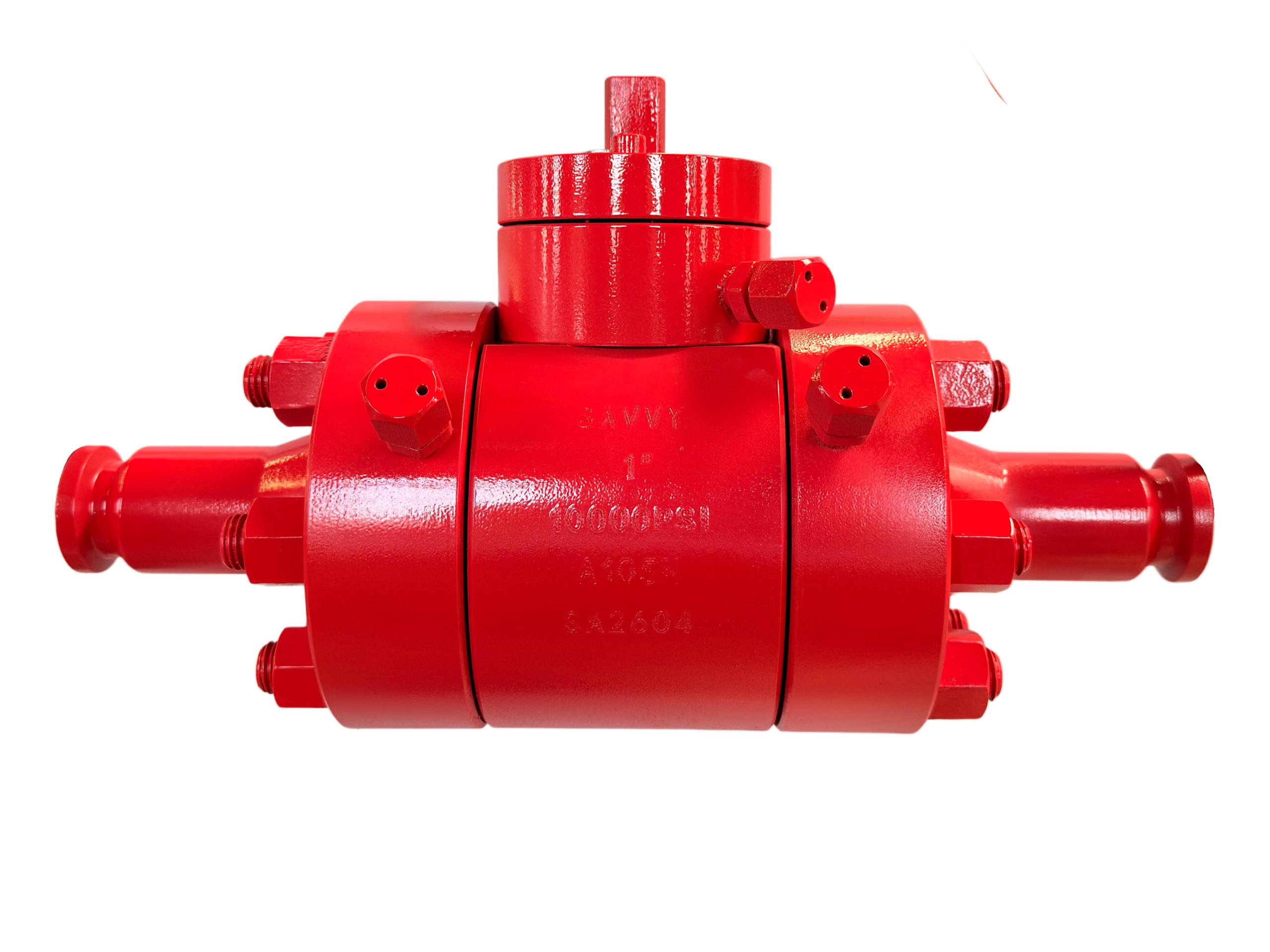
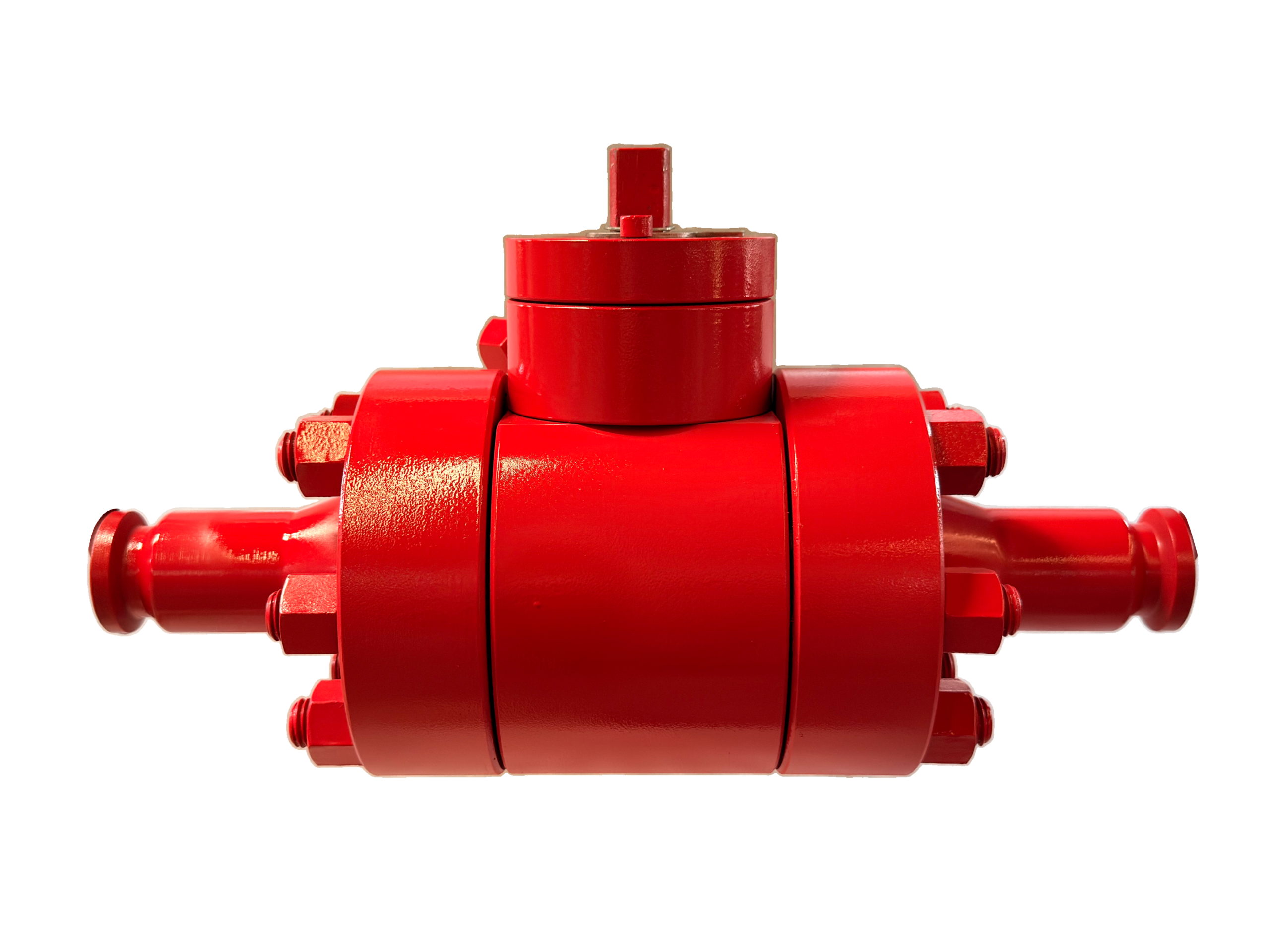
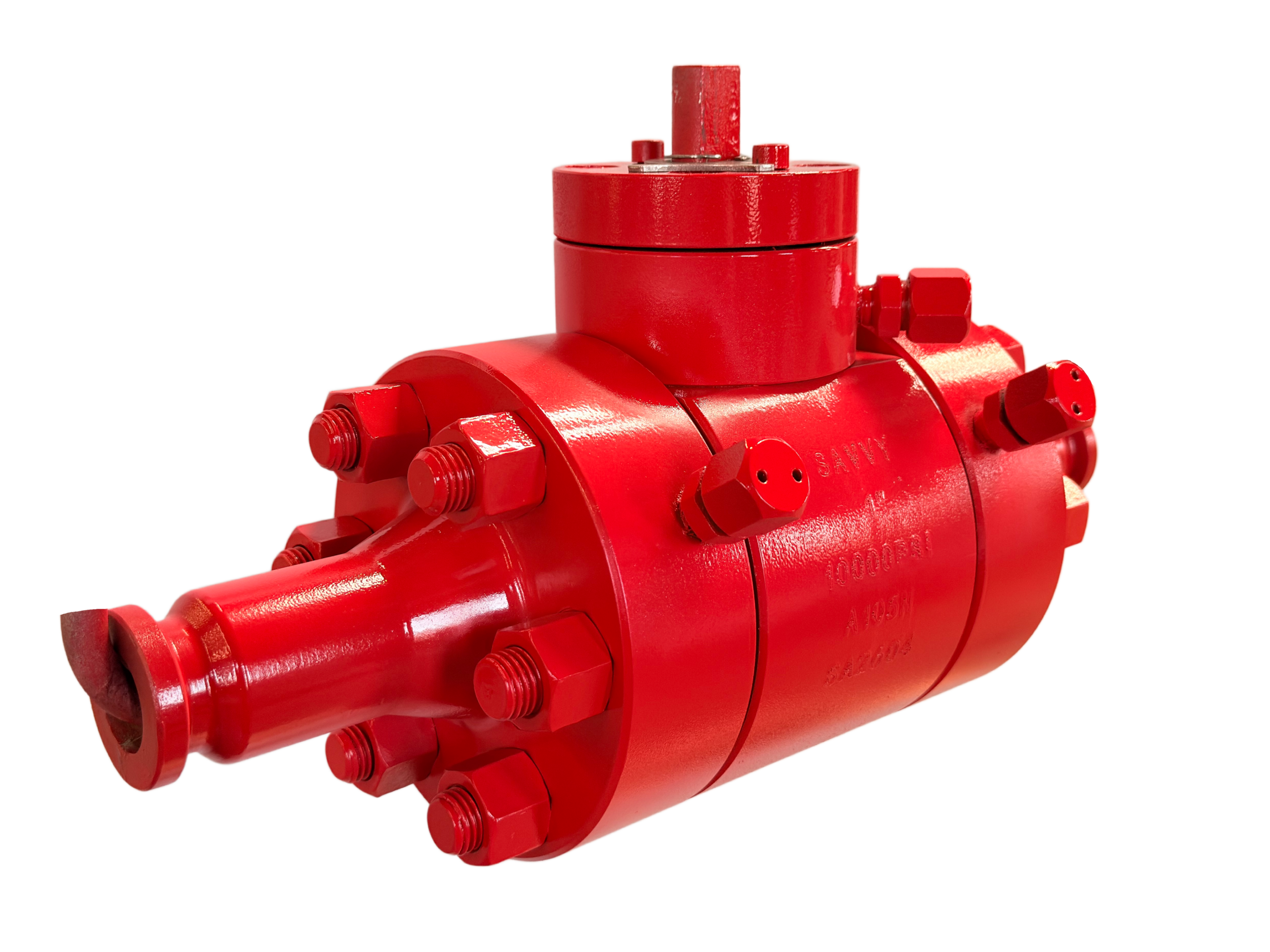
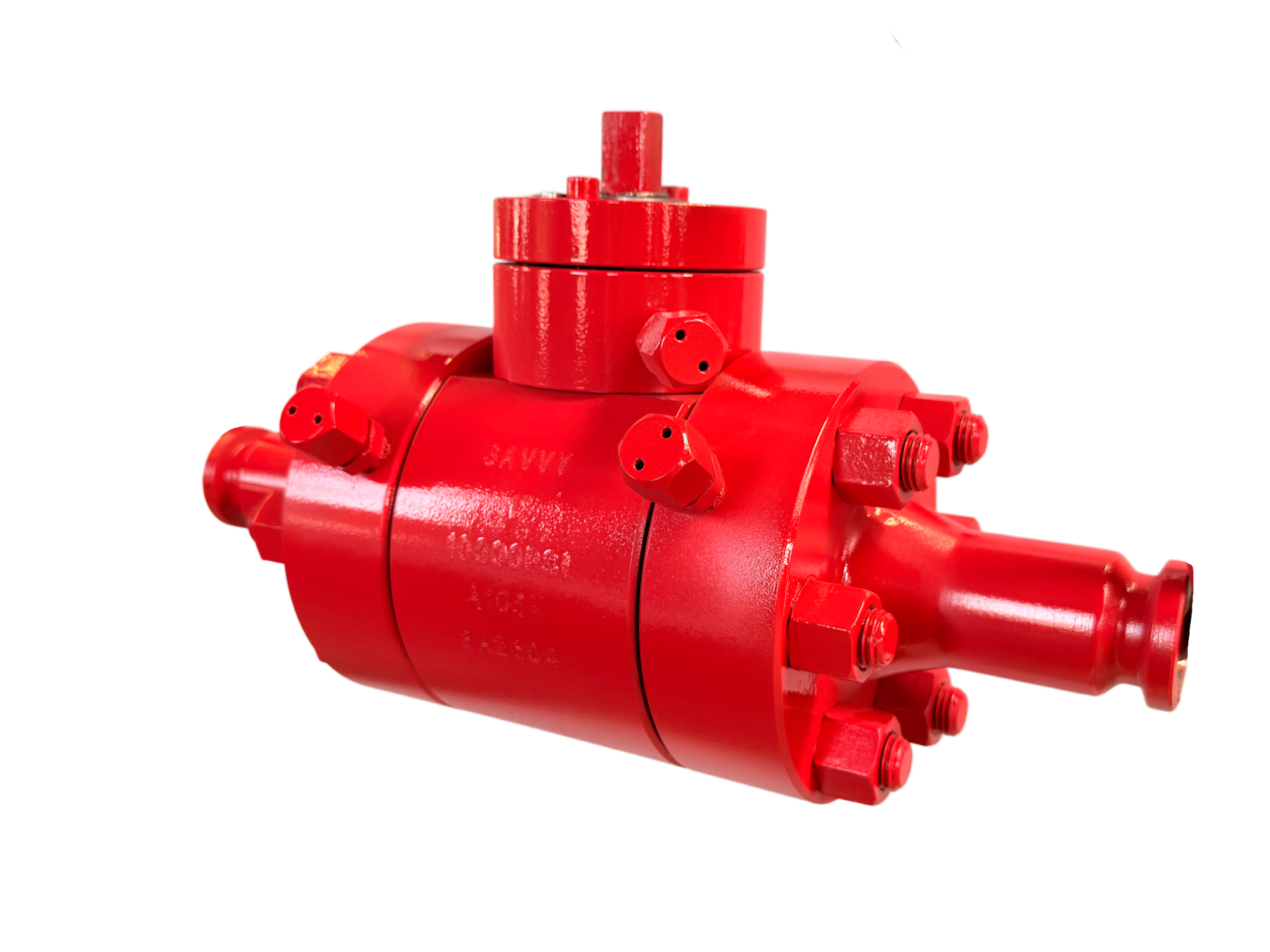
API 6A 10000PSI Trunnion Ball Valve Suitable for Grayloc Hubs
Description
API 6A 10,000 PSI Floating Ball Valve
Technical Data Sheet (Suitable for Grayloc Hubs)
1. Product Overview
This technical data sheet covers the API 6A, 10,000 PSI floating ball valve, designed specifically for integration with Grayloc hubs. The floating ball design relies on the downstream seat to seal as the ball is pushed against it under line pressure. This valve is suitable for moderate-sized, high‑pressure oil & gas applications including wellhead equipment, manifold systems, and process lines, particularly where compact design and bidirectional sealing are required.
2. Valve Scope & Design Range
| Parameter | Specification |
|---|---|
| Product Name | API 6A Floating Ball Valve |
| Design Standard | API 6A / ISO 10423 (21st Edition) |
| Size Range | 1/2″ to 4″ (larger sizes limited by floating principle) |
| Pressure Class | 2,000 psi to 10,000 psi (data sheet focus: 10,000 psi) |
| Temperature Class | Class K (-60°C to +82°C) to Class U/V (up to +180°C) |
| Product Specification Level (PSL) | PSL 1, PSL 2, PSL 3, PSL 3G (typical: PSL 3G) |
| Performance Requirement (PR) | PR 1 (standard) / PR 2 (high‑cycle) |
| Material Class | AA, BB, CC, DD, EE, FF, HH (sour service: FF) |
| Bore Type | Full bore (standard) or reduced bore |
| Body Construction | 2‑piece or 3‑piece bolted / forged steel |
| Operation | Lever, manual gear, pneumatic, electric, hydraulic |
3. Grayloc End Connection Specifications
The valve is supplied with integral hubs suitable for Grayloc clamp‑type connectors.
| Parameter | Specification |
|---|---|
| Connection Type | Grayloc® Clamp Hub Connectors |
| Design Pressure | Full vacuum up to 60,000 psig (system rated for 10,000 psi) |
| Design Temperature | -423°F to 1,700°F (-253°C to 927°C) |
| Sealing Mechanism | Metal‑to‑metal bore seal |
| Key Advantages | High‑integrity sealing; weight & space savings vs. RTJ flanges (up to 70% less torque) |
| Applicable Standards | Designed per ASME Section VIII, API 6A; optional ASME certification |
Grayloc Hub Interface Note: Hubs are manufactured per Grayloc standards and can be customized for blind, reduced port, or instrument connections. The floating ball valve’s low torque requirement makes it especially compatible with clamp‑type connections.
4. Materials of Construction
All materials comply with NACE MR0175 / ISO 15156 for H₂S & CO₂ service.
| Component | Standard Material (Sour Service) | Optional Materials |
|---|---|---|
| Body / Bonnet | ASTM A694 F60 / F65, AISI 4130 | A182 F22 (Cr‑Mo), A182 F316 (SS), Duplex SS, Inconel 625 |
| Ball | 17‑4PH SS + coating / hardfacing (e.g., NiCr, CrN) | Inconel 625 + Stellite 6, Tungsten Carbide (HVOF) |
| Seat | Reinforced PTFE, PEEK, Nylon | Devlon, Metal‑to‑Metal (graphite‑filled) |
| Stem | 17‑4PH SS / AISI 4140 | Inconel 625, Monel |
| Bolting / Fasteners | ASTM A193 B7 / A320 L7 (PTFE coated) | Stainless steel (A193 B8M) |
5. Design Features – Floating Ball Concept
-
Floating Ball Mechanism: The ball is not fixed by trunnions. Under pressure, the ball shifts slightly downstream, compressing the downstream seat and creating a tight seal. The upstream seat is only a nominal fit.
-
Bidirectional Sealing: The floating design provides sealing against pressure from either direction, with the downstream seat acting as the primary seal.
-
Low Operating Torque: No trunnion bearings means fewer moving parts; torque is generally lower than trunnion designs at smaller sizes.
-
Anti‑Blowout Stem: Stem is retained integrally in the bonnet, preventing ejection under high pressure.
-
Emergency Sealant Injection: Fittings (if specified) allow injection of sealant into seat/stem areas.
-
Anti‑static Device: Ensures electrical continuity across ball, stem, and body.
-
Fire Safe Design: Certified to API 6FA / API 607.
-
Cavity Pressure Relief: For floating ball valves, the cavity is normally self‑relieving through the upstream seat when pressure exceeds seat loading.
Note on 10,000 psi operation: Floating ball valves in API 6A 10K service are typically limited to sizes ≤ 4″ (NPS). For larger bore sizes, a trunnion‑mounted design is recommended.
6. Testing & Inspection
All testing per API 6A requirements.
| Test Type | Requirement / Procedure |
|---|---|
| Body Shell Hydrostatic | 1.5 × rated pressure (15,000 psi) – no leakage through pressure boundary |
| Seat Hydrostatic (High Pressure) | 1.1 × rated pressure (11,000 psi) – zero leakage (soft seat) |
| Seat Gas (Low Pressure) | 80 – 160 psi – bubble‑tight for soft‑seated valves |
| Double Block & Bleed (DBB) | As per API 6A – cavity venting capability verified (optional for floating) |
| PR2 Performance Validation | High‑cycle / hyperbaric per API 6A Annex F (if required) |
| NDE | MPI / LPI / RT per PSL |
| Fire Test | API 6FA / API 607 certification |
| Inspection Standard | API 598 (Valve Inspection and Test) |
7. Service Conditions & Applications
-
Service Media: Crude oil, natural gas, well fluids, water, glycol, fluids containing H₂S / CO₂ (sour service).
-
Applications: Wellhead equipment, Christmas trees (non‑choke lines), high‑pressure manifolds, offshore platforms, Grayloc hub‑based piping systems, hydraulic control panels.
-
Grayloc Integration: The compact design of a floating ball valve matches well with Grayloc hubs on size‑reduced, weight‑sensitive topside applications.
8. Actuation & Accessories
-
Manual: Lockable lever handle (≤ NPS 2), bevel gear operator (≥ NPS 3).
-
Automation: Pneumatic (double‑acting / spring‑return), electric (explosion‑proof), hydraulic.
-
Controls: Limit switch boxes, solenoid valves, positioners (analog / digital), ESD systems.
-
Redundancy: Hydraulic override available.
9. Documents & Reference Codes
-
Design Basis: API 6A (21st Edition), ASME B16.34 (pressure‑temperature rating).
-
End Connections: Grayloc hub dimensions (per Grayloc standard), ASME B16.5 (flanged), ASME B16.25 (buttweld).
-
Face‑to‑Face: ASME B16.10 or manufacturer’s standard.
-
Sour Service: NACE MR0175 / ISO 15156.
-
Fire Safety: API 6FA / API 607 / BS 6755 Part 2.
-
Marking: API Monogram, CE PED (upon request).
-
Coating: External – industrial epoxy (primer + topcoat); Internal – anti‑corrosion coating per NACE.
Disclaimer: This technical data sheet is for informational purposes only. Final specifications are subject to project requirements and engineering review. For sizes above 4″ in 10,000 psi class, a trunnion ball valve is recommended.


