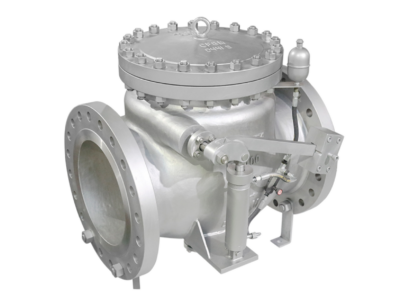
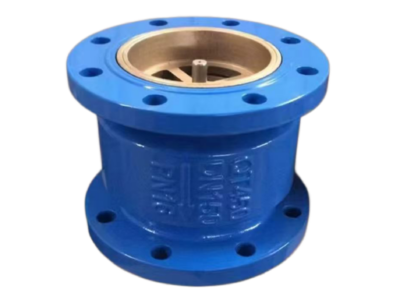
Cryogenic Open Die Forged Lift Check Valve
Description
Technical Data Sheet
Cryogenic Lift Check Valve (Bolted Bonnet, Forged Stainless Steel)
1. Product Overview
Product Name: Cryogenic Lift Check Valve
Model/Type: H64Y / H64W Series
Valve Type: Lift Check Valve (Piston Check)
Structure: Bolted Bonnet, Lift Type Disc
Body Material: Forged Stainainless Steel (ASTM A182)
Connection: Butt Welding Ends (BW)
Application: This valve is specifically designed for cryogenic services such as Liquefied Natural Gas (LNG), Liquefied Petroleum Gas (LPG), Liquid Nitrogen (LN₂), Liquid Oxygen (LO₂), and Liquid Argon (LAr). It is installed at pump discharges and along pipeline systems to prevent backflow, protecting upstream equipment and the piping network.
2. Applicable Design Standards
-
Design & Manufacture: BS 6364 (Specification for Valves for Cryogenic Service), Shell MESC SPE 77/200
-
Disc Type: Lift Type (Conical or Piston guiding)
-
Pressure Class: Class 150, Class 300, Class 600 (PN16 ~ PN100)
-
End Connection: ASME B16.25 (Butt-weld ends)
-
Face-to-Face: ASME B16.10
-
Inspection & Testing: BS 6364, ISO 15848 (Fugitive Emission), Helium Mass Spectrometry Leak Test
3. Basic Technical Specifications
| Parameter | Specification |
|---|---|
| Nominal Diameter | NPS 1/2” ~ NPS 24” (DN15 ~ DN600) |
| Pressure Rating | Class 150, Class 300, Class 600 |
| Operating Temperature | -196°C ~ +80°C (Cryogenic conditions) |
| Min. Design Temperature | -196°C (Suitable for LNG, LN2, LO2, etc.) |
| Suitable Media | Methane, Ethylene, Liquid Nitrogen, Liquid Oxygen, LNG |
| Opening Pressure | Very low; allows for operation with minimal pressure differential |
| Closing Characteristics | Sensitive disc movement with rapid, non-slam closing action |
4. Main Component Materials
| Component | Material (Standard) | Remarks |
|---|---|---|
| Body | Forged Stainless Steel F304 / F316 (ASTM A182) | Free forging ensures dense structure, no porosity, excellent impact resistance at cryogenic temps. |
| Bonnet | Forged Stainless Steel F304 / F316 (ASTM A182) | Bolted design for ease of maintenance; features an extended bonnet (long neck) to protect the sealing gasket from cryogenic temperatures. |
| Disc | Stainless Steel F304/F316 + Stellite Hardfacing | Lift-guided design; sealing surface hardfaced with Stellite for erosion and galling resistance. |
| Seat | Stainless Steel F304/F316 + Stellite Hardfacing | Renewable or integral type with tapered sealing surface. |
| Disc Spring | Inconel 718 / X-750 | Cryogenic-compatible, corrosion-resistant alloy providing stable initial sealing force. |
| Gasket | Stainless Steel Spiral Wound Gasket + Graphite | Suitable for low-temperature cycling with excellent resilience. |
| Fasteners | Stud Bolts, ASTM A320 L7 / B8M | High-strength low-temperature bolting with A194 8/4 nuts. |
5. Dimension Table (Reference – Class 300)
Note: Cryogenic valves feature an extended bonnet to keep the bonnet joint (gasket area) away from the cold zone, ensuring the gasket material retains its elasticity and preventing external icing of the bolting area. The following are typical dimensions; please refer to the manufacturer’s certified drawing.
| NPS (in) | End-to-End L (mm) – BW | Bonnet Height (approx. mm) | Bore Diameter (mm) |
|---|---|---|---|
| 1/2″ | 140 | 210 | 15 |
| 3/4″ | 152 | 220 | 20 |
| 1″ | 165 | 235 | 25 |
| 1 1/2″ | 190 | 280 | 38 |
| 2″ | 216 | 310 | 51 |
| 3″ | 283 | 360 | 76 |
| 4″ | 305 | 410 | 102 |
| 6″ | 403 | 530 | 152 |
6. Features & Core Technology
-
Extended Bonnet (Long Neck): The bonnet is designed with sufficient length (per BS 6364) to position the body-bonnet connection (gasket) away from the valve body. This ensures the gasket temperature remains above its embrittlement point and prevents frost from forming on the bonnet and bolting area. (Note: This valve has no stem; the extension is a static housing).
-
Cryogenic Treatment: All pressure-containing parts (body, bonnet, disc) undergo deep cryogenic treatment (typically cooled to -196°C and soaked) before final machining. This stabilizes the material microstructure by transforming retained austenite, preventing dimensional changes or seal failure under operating conditions.
-
Lift-Guided Disc: The disc moves vertically within the bonnet guide, ensuring stable travel and accurate alignment with the seat for reliable shut-off.
-
Forged Body: Utilizes forged components. Compared to castings, forgings offer a more uniform and dense grain structure, eliminating casting defects such as porosity and slag inclusions, resulting in higher safety factors and superior cryogenic impact toughness.
-
Anti-Static Device: The valve includes an anti-static device (per BS 6364) to prevent electrostatic charge accumulation across the disc/seat interface.
-
Rigorous Testing: After assembly, valves undergo not only room-temperature tests but also cryogenic performance tests (typically immersed in liquid nitrogen) to verify sealing and operability. This is supplemented by Helium Mass Spectrometry testing for valve seat and external leakage to ensure zero fugitive emissions.
7. Inspection & Testing
-
Shell Hydrostatic Test: 1.5 x Rated Pressure at ambient temperature.
-
Low-Pressure Seat Test: 0.6 MPa (6 bar) with air or inert gas at ambient temperature.
-
Cryogenic Seat Test: Tested at -196°C (in liquid nitrogen) to verify sealing performance. Leakage must conform to BS 6364 requirements (typically zero visible leakage or very low bubble count).
-
Helium Leak Test: Helium Mass Spectrometry is used to detect micro-leaks, ensuring absolute tightness of the body-bonnet gasket seal.
8. Selection Guidelines
-
Installation Orientation: Lift check valves are designed for installation in horizontal pipelines only, with the bonnet facing vertically upwards. Ensure the flow direction arrow matches the actual media flow.
-
Cleanliness (Oxygen Service): For oxygen or other oxidizing media service, the valve must undergo strict degreasing and cleaning procedures to remove all hydrocarbon residues.
-
Sealing: Although the seat utilizes a metal-to-metal seal (hardfaced with Stellite), the sealing performance is excellent at cryogenic temperatures due to differential contraction rates.