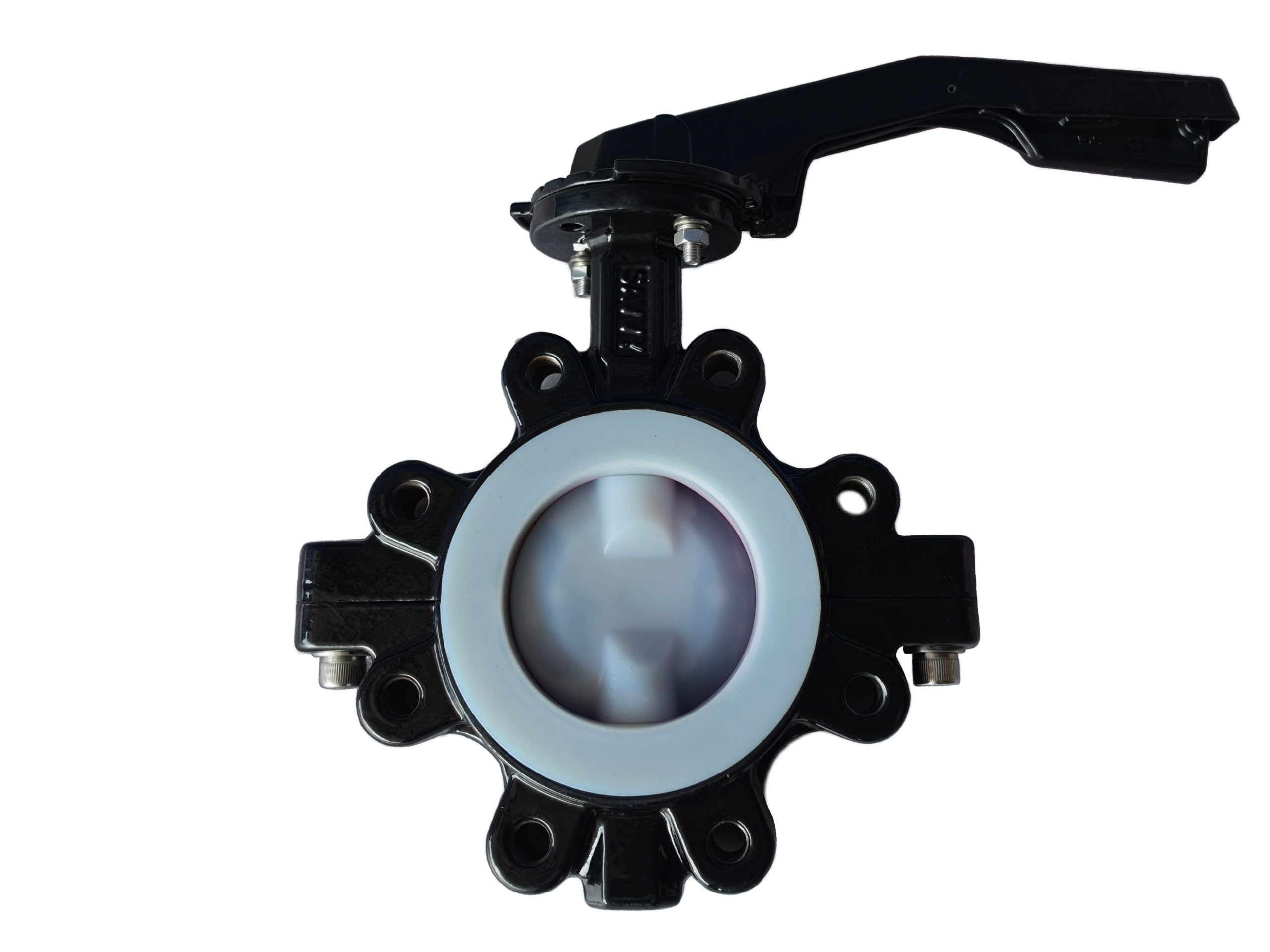
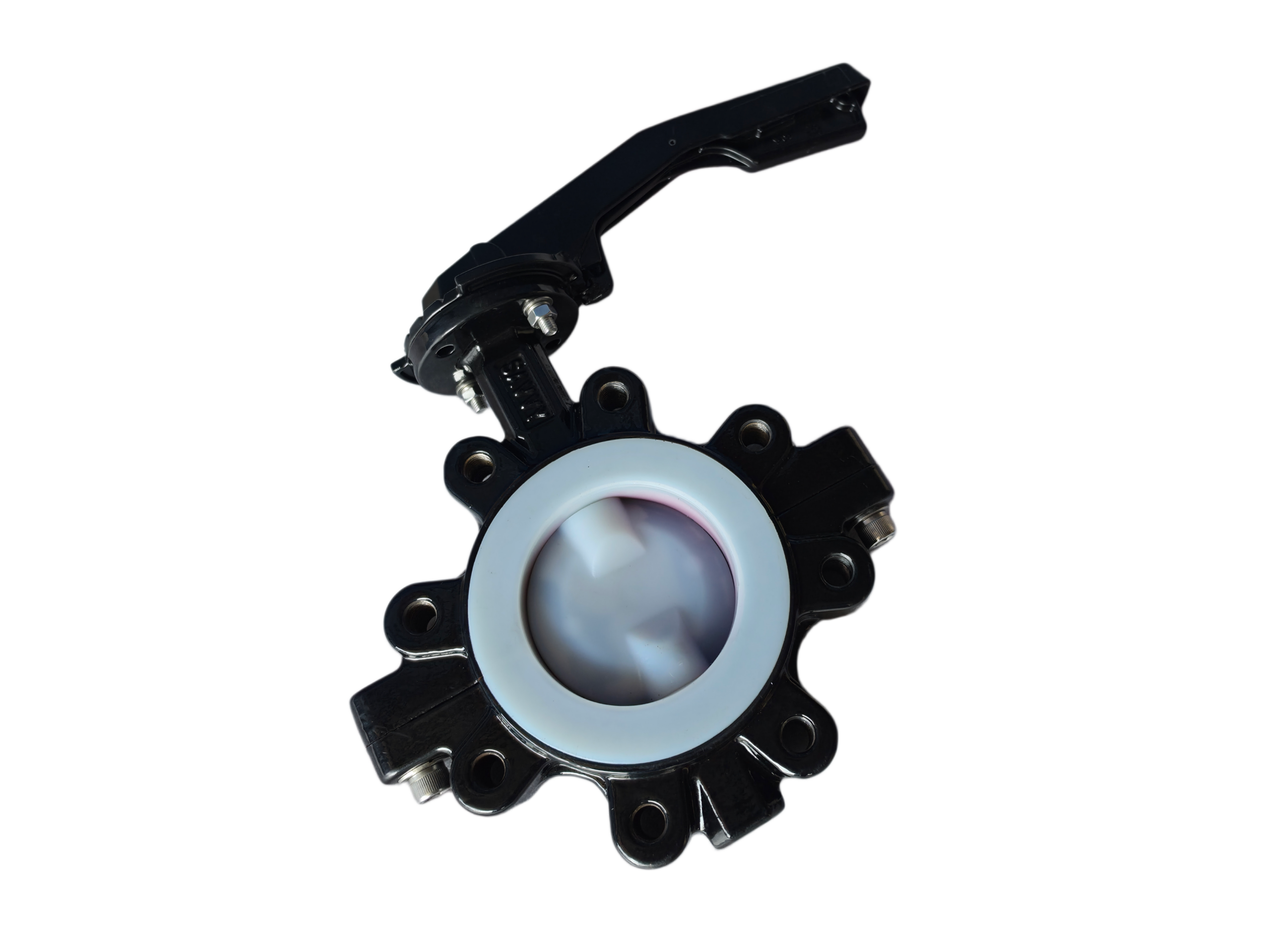
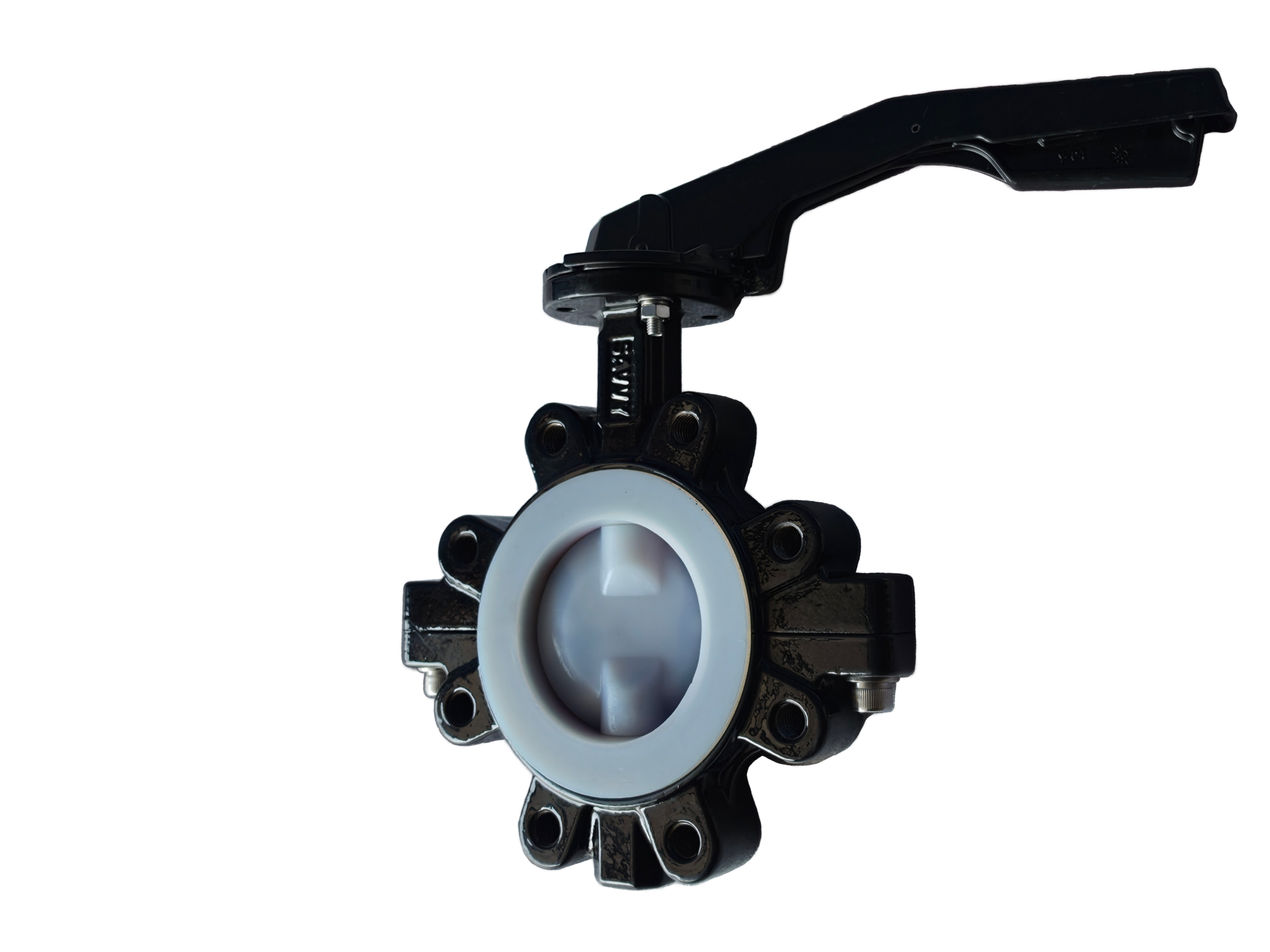
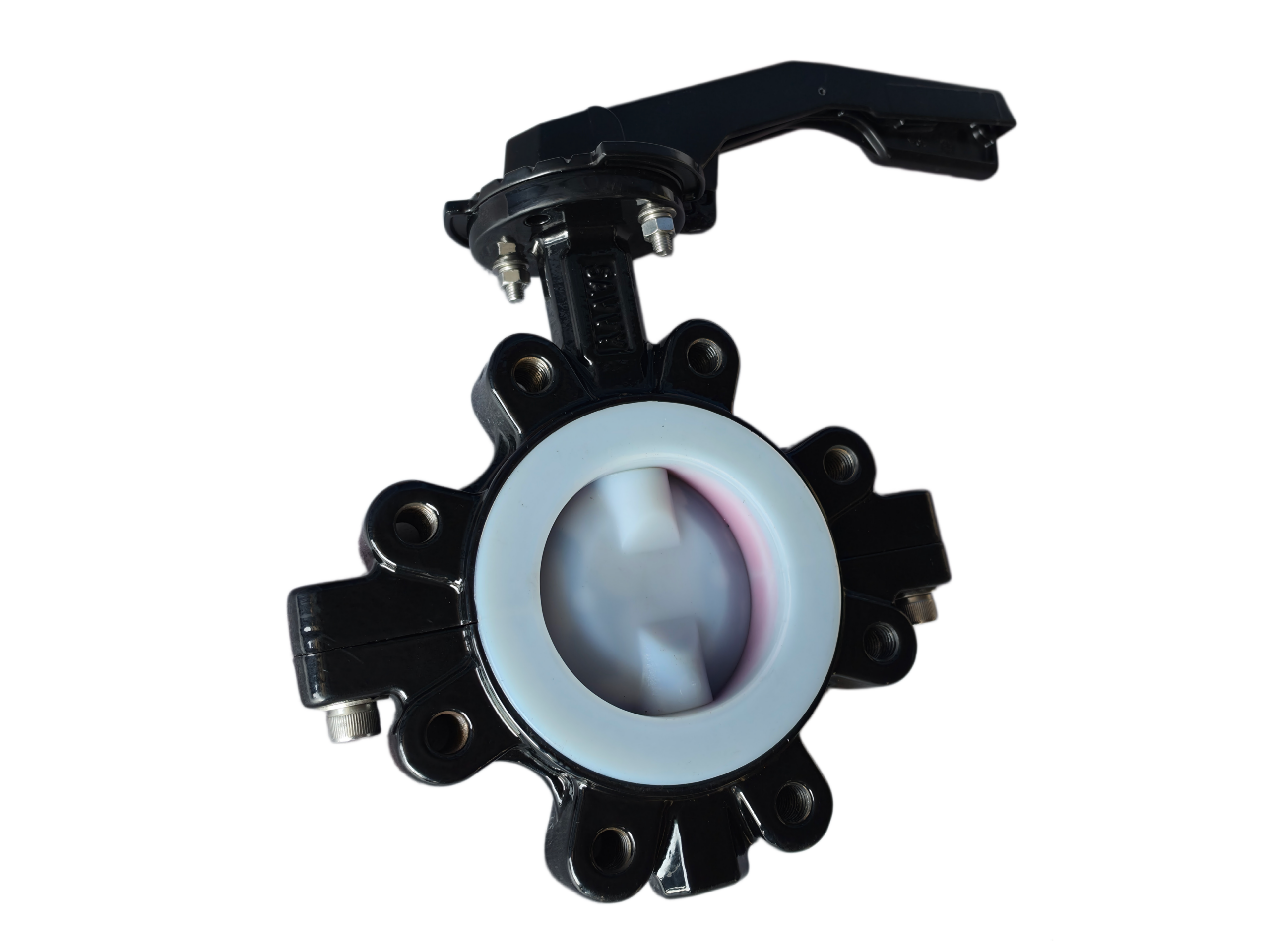
PFA Lined Concentric Butterfly Valves
Description
PFA Lined Concentric Butterfly Valve Technical Data Sheet
General Specifications
| Parameter | Specification |
|---|---|
| Valve Type | Concentric Butterfly Valve (Resilient Seated) |
| Design Type | Wafer, Lug, or Double Flanged |
| Model Reference | D71F4/F46, D371F4/F46, D341F4/F46 (Lever/Gear/Actuated) |
| Nominal Size (DN) | DN40 ~ DN600 (1 ½” ~ 24″) |
| Pressure Rating | PN10 / PN16; Class 150LB |
| End Connection | Wafer (clamped), Lugged (threaded inserts), Double Flanged (raised face) |
| Face-to-Face Standard | API 609 / ISO 5752 / EN 558 (Series 20 / Basic Series) |
| Design Standard | API 609 / MSS SP-67 / EN 593 / GB/T 12238 |
| Testing Standard | API 598 / ISO 5208 / EN 12266-1 |
| Certification | CE, FDA (for PFA material), WRAS (for drinking water), ATEX (on request) |
Material Construction
| Component | Material Options |
|---|---|
| Body | Ductile Iron (GGG40/50), Carbon Steel (WCB), Gray Cast Iron (GG25), Stainless Steel (CF8/CF8M) |
| Disc (Butterfly Plate) | Stainless Steel (SS304, SS316), Ductile Iron fully encapsulated with PFA |
| Body Lining | PFA (Perfluoroalkoxy) – Fully molded, seamless lining, pure white/translucent |
| Disc Lining / Encapsulation | PFA (Perfluoroalkoxy) – Fully bonded and sintered, minimum 3mm thickness |
| Shaft / Stem | Stainless Steel (SS304, SS316, SS630/17-4PH) – Isolated from media |
| Seat Ring | Integral PFA liner (self-seating), or replaceable PTFE seat (optional) |
| Bushing / Bearing | PTFE-Composite, Reinforced PTFE (self-lubricating) |
| O-Rings / Seals | FPM (Viton), EPDM, or PTFE encapsulated |
Key Design Features
| Feature | Benefit |
|---|---|
| Full PFA Lining & Encapsulation | The entire body interior and the disc are completely lined and encapsulated with PFA, providing superior corrosion resistance against nearly all aggressive chemicals, acids, alkalis, and solvents. No metal parts contact the media. |
| Concentric Design | The stem is centered in the disc and valve bore. The disc remains in contact with the resilient seat throughout the stroke, giving a tight seal in both directions (bi-directional zero leakage). |
| Excellent Anti-Corrosion | PFA is chemically inert and withstands highly permeable media (chlorine, bromine, strong oxidizing acids like nitric and sulphuric acids) far better than standard PTFE due to its non-porous structure. |
| High Temperature Stability | PFA linings can operate continuously at temperatures from -29°C to +180°C (-20°F to +356°F), outperforming standard rubber or PTFE linings. |
| Anti-Static & Fire Safe (Option) | Dedicated conductive PFA lining options or fire-safe lip designs are available for applications demanding ATEX compliance or rigorous safety standards. |
| Bubble-Tight Shutoff | Interference fit between the PFA-lined disc and the PFA/PTFE integral body seat ensures zero leakage, exceeding EN 12266-1 Rate A (Tightness Class A). |
| Low Torque & Smooth Operation | The non-stick property of PFA combined with reinforced PTFE bearings significantly reduces operating torque and eliminates stick-slip effects. |
| Vacuum Rated | Due to its robust bonding process, the fully molded PFA liner withstands full vacuum service up to the design pressure rating. |
Performance Data
| Parameter | Specification |
|---|---|
| Working Temperature Range | -29°C to +180°C (depending on pressure and media) |
| Suitable Media | Strong inorganic acids (HCl, H₂SO₄, HNO₃, HF), alkalis, organic solvents, ultra-pure water, liquid chlorine, bromine, corrosive slurries |
| Leakage Class | Zero Leakage (Bubble-tight) to EN 12266-1 Rate A / API 598 Class VI |
| Flow Direction | Bi-directional (tight seal in both downstream and upstream directions) |
| Operating Pressure (Maximum) | PN16 (16 bar) up to DN300; PN10 (10 bar) for DN350–DN600; Class 150LB |
| Disc Rotation | 0° to 90° (mechanical stops at fully open/closed) |
Pressure / Temperature Ratings
The maximum allowable working pressure (MAWP) is influenced by the temperature. Typical values for a PFA lined valve with Ductile Iron body at Class 150 / PN16:
| Temperature (°C) | MAWP (bar) – PN16 / Class 150 |
|---|---|
| -29 to +50 | 16.0 bar (232 psi) |
| +100 | 14.0 bar (203 psi) |
| +150 | 11.0 bar (159 psi) |
| +180 | 8.5 bar (123 psi) |
*Note: For detailed pressure/temperature curves, refer to the specific EN 1092-1 or ASME B16.34 flange rating tables and the PFA manufacturer’s data.*
Typical Applications
-
Chemical Processing Plants: Handling highly corrosive acids, solvents, and caustic streams
-
Chlor-Alkali Industry: Brine, liquid chlorine, caustic soda, hydrochloric acid
-
Pharmaceutical & Food: Ultra-pure water distribution, CIP (Clean-in-Place) systems (FDA compliance for PFA)
-
Pickling & Plating Lines: Acid circulation (H₂SO₄, HNO₃, HF mixtures)
-
Fine Chemical & Pesticides: Corrosive and toxic fluid transfer
-
Water Treatment: Dosing of aggressive chemicals like ferric chloride, sodium hypochlorite, and ozone
-
Steel Mills: Acid regeneration plants (ARP) and pickling lines


