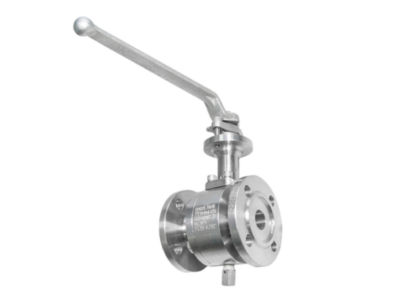
1/2″-300LB 2-Piece Open Die Forged Cryogenic Ball Valve
Description
TECHNICAL DATA SHEET
Forged Stainless Steel Cryogenic Floating Ball Valve
Series: DQ41F/Y / DQ61F/Y
Models: Reduced Bore / Full Bore, Side-Entry (Split Body)
1. PRODUCT OVERVIEW
This forged stainless steel cryogenic ball valve is specifically engineered for reliable shut-off and flow control of liquefied gases and cryogenic fluids down to -196°C. Designed in accordance with BS 6364, ISO 28921-1, and MSS SP-134 standards, it features a two-piece bolted body construction with extended bonnet and fully forged austenitic stainless steel components (ASTM A182 F304/F304L/F316L) to eliminate porosity and ensure structural integrity under extreme thermal cycling .
Key Features:
-
100% Forged Body Construction: ASTM A182 F304/F304L stainless steel, no cast defects, superior low-temperature impact toughness .
-
Extended Bonnet (Long Neck): Minimum 250mm neck length for DN50 and above, positions stem packing at ambient temperature, prevents ice formation, and allows insulation application .
-
Cryogenic Stabilization Treatment: All pressure-containing parts undergo deep cryogenic treatment (LN₂ immersion, -196°C soak for 2-6 hours, 2-3 cycles) to stabilize microstructure and relieve machining stresses .
-
Blow-out Proof Stem: Integrally forged stem with anti-blowout shoulder, anti-static device (spring-loaded contact) per ISO 28921-1 .
-
Low Emission Packing: Live-loaded disc spring + graphite/RPTFE packing system, meets ISO 15848-1 Class B fugitive emission requirements .
-
Cavity Pressure Relief: Upstream seat is pressure-relieving design to prevent body cavity over-pressurization due to cryogenic fluid vaporization .
-
Full Traceability: Positive Material Identification (PMI) and EN 10204 Type 3.1 material certification available .
2. DESIGN STANDARDS & SPECIFICATIONS
| Item | Standard / Code |
|---|---|
| Design & Manufacture | BS 6364, ISO 28921-1, MSS SP-134, ASME B16.34 |
| Face-to-Face Dimension | BS 6364 Table 1, ISO 5752 Series 11 (Extended) |
| End Connections | ASME B16.5 (RF/RTJ), EN 1092-1, GB/T 9113, JB/T 79 |
| Butt Weld Ends | ASME B16.25, GB/T 12224 |
| Socket Weld / Thread | ASME B16.11, NPT/BSPT per ISO 7-1 |
| Pressure Testing | API 598, ISO 5208, BS 6364 Annex A (Cryogenic) |
| Fugitive Emission | ISO 15848-1 Class B |
| Fire Safe (Optional) | API 607 / ISO 10497 |
| Anti-Static | ISO 28921-1, BS 5353 |
| NACE | MR0175 / ISO 15156 (Optional) |
| SIL Rating | SIL 3 Capable (IEC 61508) |
3. GENERAL TECHNICAL PARAMETERS
| Parameter | Specification |
|---|---|
| Valve Type | Floating Ball, Side-Entry (2-Piece Split Body), Anti-blowout Stem |
| Size Range | DN15 ~ DN300 (½” ~ 12″) |
| Pressure Classes | ASME Class 150, 300, 600 (PN16 ~ PN100) |
| Temperature Range | -196°C ~ +80°C (Standard Cryogenic) -196°C ~ +200°C (High Temp Option, consult factory) |
| Design Temperature | -196°C (Liquid Nitrogen) |
| Minimum Design Temp | -196°C (316L), -101°C (LC3), -46°C (LCB) |
| Service Media | LNG, LN₂, LO₂, LAr, LHe, Ethylene, Liquid Propane, Ammonia, CO₂, Hydrogen |
| Flow Pattern | Full Bore (Regular) / Reduced Bore (Optional) |
| Flow Direction | Uni-directional (Standard), Bi-directional (Optional) |
| Operation | Manual (Lever/Gear), Pneumatic (DA/SR), Electric |
| Mounting | ISO 5211 top flange for direct actuator mounting |
| Insulation | Extended bonnet suitable for cold box installation |
4. MATERIALS OF CONSTRUCTION (FORGED STAINLESS STEEL)
| Component | Material (ASTM) | Notes |
|---|---|---|
| Body Halves | A182 F304/F304L (Forged) | Carbon ≤ 0.03%, cryogenic stabilization treated, -196°C impact ≥ 50J |
| Bonnet (Extension) | A182 F304/F304L (Forged) | Extended length per BS 6364, integrally forged or welded construction |
| Ball | A182 F304/F304L (Forged) | Chrome-nickel austenitic, surface Ra ≤ 0.4μm, floating design |
| Stem | A182 F304/F304L/F316L (Forged) | Anti-blowout shoulder, cryogenic nitrogen hardening optional |
| Seat Rings | RPTFE (Glass/Carbon Fiber Reinforced) / PCTFE / PEEK | Spring-energized for low-temp sealing |
| Seal Carrier | A182 F304/F304L | – |
| Stem Packing | Graphite Foil + RPTFE, Live-loaded with Belleville springs | Low emission, ISO 15848-1 Class B |
| Gaskets | Spiral Wound (SS316L/Graphite) | – |
| Body Bolting | ASTM A193 B8M Class 2 (Stainless) | High strength, low-temperature compatible |
| Nuts | ASTM A194 8M | – |
| Thrust Washer | RPTFE / PTFE + Bronze | Anti-extrusion, low friction |
| Anti-Static Device | SS316L Spring + Plunger | Resistance ≤ 10Ω |
| Handle / Gearbox | SS304 / Ductile Iron | – |
Alternative Forged Materials (Upon Request):
-
A182 F316/F316L: Enhanced pitting corrosion resistance
-
A182 F321: Stabilized grade for higher intermittent temperatures
-
Inconel 625 / Hastelloy C-276: For extreme low temp (< -196°C) + high corrosion
-
A352 LC3 / LCB: Cast low carbon steel (not forged, for non-SS requirements)
5. CRYOGENIC TREATMENT & TESTING
Cryogenic Stabilization Process:
-
All rough-machined forged components (body, bonnet, ball, stem) are immersed in liquid nitrogen (-196°C).
-
Soaking time: 2-6 hours depending on mass (minimum 2 hours per cycle) .
-
Components are returned to ambient temperature naturally (no forced heating).
-
Process repeated for minimum 2 cycles .
-
Final precision machining after stabilization to ensure dimensional stability at cryogenic service.
Purpose:
-
Transforms retained austenite
-
Relieves residual stresses from forging/welding
-
Prevents dimensional changes and seal leakage during thermal cycling
Impact Testing:
-
Charpy V-Notch test per ASTM A370
-
Acceptance criteria: ≥ 41J (average) at -196°C for F304L
-
AOKAVI standard: ≥ 50J at -196°C
6. DIMENSIONS & CONNECTIONS (ASME CLASS 150/300 – REFERENCE)
6.1 Flanged Type (DQ41F/Y) – PN16/PN40 / Class 150/300
Unit: mm (Reference dimensions – subject to manufacturer design)
| DN | Size (in) | L (RF) | L (RTJ) | D (Class 150) | D (Class 300) | Bonnet Extension H | Approx. Weight (kg) |
|---|---|---|---|---|---|---|---|
| 15 | ½” | 130 | 140 | 95 | 95 | 230 | 3.0 |
| 20 | ¾” | 140 | 152 | 105 | 105 | 260 | 4.0 |
| 25 | 1″ | 150 | 165 | 115 | 115 | 280 | 5.0 |
| 32 | 1¼” | 165 | 178 | 135 | 135 | 290 | 9.0 |
| 40 | 1½” | 180 | 190 | 145 | 145 | 320 | 11.0 |
| 50 | 2″ | 203 | 216 | 160 | 165 | 340 | 15.0 |
| 65 | 2½” | 222 | 241 | 180 | 190 | 370 | 19.0 |
| 80 | 3″ | 241 | 283 | 195 | 210 | 400 | 27.0 |
| 100 | 4″ | 305 | 305 | 215 | 255 | 450 | 38.0 |
| 150 | 6″ | 394 | 403 | 280 | 320 | 550 | 81.0 |
| 200 | 8″ | 457 | 502 | 345 | 380 | 680 | 95.0 |
| 250 | 10″ | 533 | 568 | 405 | 445 | 790 | 140.0 |
| 300 | 12″ | 610 | 648 | 485 | 520 | 890 | 200.0 |
Notes:
-
Flange drilling per ASME B16.5 (Class 150 / 300). For PN16/PN40, dimensions vary per EN 1092-1.
-
Bonnet extension length per BS 6364: Minimum 250mm for DN50 and above; actual H dimension includes operator clearance .
-
Weight shown for Class 150 carbon steel body; SS body slightly heavier.
6.2 Socket Weld / Threaded Type (DQ61F/Y) – NPT/BSPT/SW
Unit: mm
| DN | Inch | L | d (Bore) | D (Socket) | D1 (Thread) | H (Extension) | W (Handle) |
|---|---|---|---|---|---|---|---|
| 15 | ½” | 92 | 13 | 36 | 21.8 | 230 | 160 |
| 20 | ¾” | 111 | 18 | 42 | 27.3 | 260 | 220 |
| 25 | 1″ | 127 | 23 | 52 | 33.8 | 280 | 220 |
| 32 | 1¼” | 140 | 28 | 60 | 42.6 | 290 | 250 |
| 40 | 1½” | 152 | 35 | 68 | 48.7 | 320 | 250 |
| 50 | 2″ | 178 | 45 | 80 | 61.2 | 340 | 350 |
Source:
7. PRESSURE-TEMPERATURE RATING
Forged A182 F304/F304L – ASME B16.34
| Temperature (°C) | Class 150 (psi) | Class 300 (psi) | Class 600 (psi) |
|---|---|---|---|
| -29 to +38 | 285 | 740 | 1480 |
| +50 | 270 | 705 | 1410 |
| +100 | 235 | 615 | 1230 |
| -196°C (Derated) | 230 | 600 | 1200 |
Critical Notes:
-
Floating ball design is limited to Class 300 maximum due to stem thrust loading .
-
For Class 600 and above, trunnion-mounted cryogenic ball valve design is required.
-
Pressure rating at -196°C is derated per ASME B16.34 and BS 6364 requirements .
8. PERFORMANCE & LEAKAGE TESTS
| Test Type | Standard | Criteria |
|---|---|---|
| Shell Hydrostatic Test | API 598 / ISO 5208 | 1.5 × rated pressure at ambient, no visible leakage |
| High-Pressure Pneumatic Test | API 598 | 0.6 MPa (80 psi) air, soap bubble test |
| Cryogenic Seat Leakage Test | BS 6364 Annex A | Valve immersed in LN₂ (-196°C), 1.1× rated pressure, max leakage: 0.1 Nm³/hr × DN (mm) for gas |
| High-Performance Cryogenic Leakage | AOKAVI / ISO 28921-1 | ≤ 1×10⁻⁹ mL/min (Helium) at -196°C |
| Fugitive Emission (Stem) | ISO 15848-1 Class B | ≤ 10⁻⁵ mbar·L/s (Helium) |
| Anti-Static Test | ISO 28921-1 | Resistance ≤ 10Ω between stem and body |
| Fire Safe (Optional) | API 607 | Per API 607 7th Edition |
9. OPERATING TORQUE (REFERENCE @ -196°C)
| DN | Size | Torque (N·m) @ ΔP=40 bar | Actuator Recommendation |
|---|---|---|---|
| 15 | ½” | 8 – 12 | Manual Lever / Small Pneumatic |
| 25 | 1″ | 20 – 30 | Manual Lever |
| 50 | 2″ | 80 – 120 | Manual Lever / Gear |
| 80 | 3″ | 180 – 250 | Gear / Pneumatic |
| 100 | 4″ | 300 – 400 | Gear / Pneumatic |
| 150 | 6″ | 700 – 900 | Gearbox / Pneumatic |
Notes:
-
Torque increases significantly with pressure differential and seat material (PCTFE higher than RPTFE).
-
Safety factor for actuator sizing: 1.3 – 1.5 for pneumatic, 1.5 – 2.0 for electric .
-
Values shown for RPTFE seats, clean media, DN50 tested per .
10. DESIGN FEATURES & CRYOGENIC SPECIALTIES
Extended Bonnet (Long Neck):
-
Mandatory for service below -50°C .
-
Positions stem packing and actuator at ambient temperature zone.
-
Prevents ice formation and lubrication solidification.
-
Standard neck length: 250mm for DN50, scaled proportionally for other sizes.
Pressure Relief Mechanism:
-
Floating ball design inherently allows upstream seat to act as pressure relief.
-
Prevents body cavity overpressure due to liquid vaporization (cryogenic pumping effect) .
-
For fixed ball designs, optional internal relief valve or self-relieving seat.
Anti-Static Device:
-
Required per ISO 28921-1 and BS 5353 for flammable cryogenic media (LNG, ethylene, etc.).
-
Spring-loaded plunger continuously grounds ball to body.
Oxygen Service Cleaning:
-
Optional degreasing and cleaning per CGA G-4.1 (for liquid oxygen service).
-
Chlorine-free packaging and labeling .
11. APPLICATIONS & INDUSTRY USE
| Industry | Typical Media | Temperature |
|---|---|---|
| LNG / LPG | Methane, Ethane, Propane, Butane | -162°C to -46°C |
| Industrial Gases (Air Separation) | Liquid Nitrogen (LN₂), Liquid Oxygen (LO₂), Liquid Argon (LAr) | -196°C to -183°C |
| Hydrogen Energy | Liquid Hydrogen (LH₂) | -253°C (Inconel/Ti req’d) |
| Petrochemical | Ethylene, Propylene | -104°C |
| Refrigeration | Ammonia (R717), CO₂ (R744) | -46°C to -78°C |
| Cryogenic Storage | Liquid Helium (LHe) | -269°C (Special alloy) |
| Aerospace | Rocket propellants (LO₂, LH₂) | -253°C to -183°C |
| Pharmaceutical / Biotech | Liquid nitrogen freezing | -196°C |
12. QUALIFICATION & CERTIFICATION
| Certification | Scope | Availability |
|---|---|---|
| BS 6364 | Cryogenic valve design & testing | Standard |
| ISO 28921-1 | Industrial cryogenic valves | Standard |
| PED 2014/68/EU | Category III, Module H | Optional |
| TA-Luft (VDI 2440) | Fugitive emission | Optional |
| API 607 | Fire safe testing | Optional |
| NACE MR0175 | Sour service | Optional |
| ATEX 2014/34/EU | Explosive atmospheres (Zone 1/2) | Optional |
| ISO 9001:2015 | Quality management | Standard |
| EN 10204 3.1/3.2 | Material certification | Optional |
13. SELECTION & ORDERING INFORMATION
To ensure correct valve selection for your cryogenic application, please specify:
-
Model: DQ41F (Flanged) / DQ61F (SW/NPT) / DQ47F (Gear)
-
Size (DN/NPS): e.g., DN50 (2″)
-
Pressure Class: Class 150 / 300 / PN16 / PN40
-
Body Material: A182 F304/F304L (Forged SS) — standard for -196°C
-
Ball/Stem Material: A182 F304/F304L
-
Seat Material: RPTFE / PCTFE / PEEK (specify)
-
End Connection: RF flange, RTJ flange, NPT, BSPT, SW, BW
-
Design Temperature: -196°C / -101°C / -46°C
-
Service Media: LNG / LN₂ / LO₂ / Ethylene / Other (specify)
-
Operation: Manual Lever / Gear / Pneumatic / Electric
-
Special Requirements:
-
Cryogenic test with BS 6364 certificate
-
Oxygen cleaning (CGA G-4.1)
-
Anti-static device
-
Fire-safe design (API 607)
-
NACE MR0175
-
Extended bonnet length (custom)
-
PMI testing
-
EN 10204 3.1 material certs
-