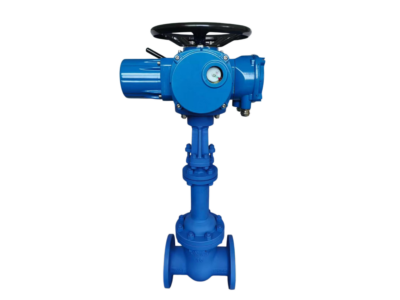
DN50-PN16-RF Self‑operated Temperature Control Valve
Description
Technical Data Sheet – Self‑operated Temperature Control Valve
(WCB Body, DN50-PN16-RF, Flanged, No External Power Required)
| Parameter | Specification |
|---|---|
| Product Name | Self‑operated Temperature Control Valve |
| Valve Type | 2‑way, straight‑through, self‑operated |
| Nominal Diameter (DN) | 50 mm |
| Nominal Pressure (PN) | PN16 (1.6 MPa) |
| Connection Type | Flanged |
| Flange Face Type | RF (Raised Face) |
| Applicable Flange Standard | GB/T 9119 / HG/T 20592 / ISO 7005 |
Operating Principle
The self‑operated temperature control valve uses the thermal expansion/contraction of a temperature‑sensitive liquid (which is incompressible) to automatically regulate temperature without any external power source (electricity or compressed air).
As the controlled medium temperature changes, the sensing liquid inside the temperature sensor (bulb) expands or contracts uniformly. This volume change is transmitted through a capillary tube to the actuator, which moves the valve stem and plug, thereby adjusting the flow of the heating medium (steam, hot water, thermal oil, etc.). The temperature of the heated medium is maintained within the set range.
-
Controlled medium temperature above setpoint → sensing liquid expands → valve plug closes → heating medium flow reduces
-
Controlled medium temperature below setpoint → sensing liquid contracts → return spring opens valve plug → heating medium flow increases
Body & Main Component Materials
| Component | Material | Remarks |
|---|---|---|
| Body | WCB Cast Steel (ASTM A216 Grade WCB) | Suitable for high temperatures, up to 350℃ |
| Plug / Seat / Stem | Stainless Steel 304 (CF8) | — |
| Balancing element | Stainless Steel 316L bellows | Overcomes high differential pressure, ensures tight shut‑off |
| Stem sealing | V‑ring high‑temperature seal assembly / special composite seal | Prevents stem binding or leakage |
| Sensing bulb | Stainless Steel 304 | — |
| Capillary tube | Copper tube (standard length 3.5~4 m) | Extendable to 5/10/15 m on request |
| Actuator (Thermostat) | Stainless steel housing | Overload protection device incorporated |
WCB Body Material Data (ASTM A216 Grade WCB)
| Parameter | Value |
|---|---|
| Standard | ASTM A216 / ASME SA-216 |
| Material Type | Carbon steel casting |
| Chemical Composition | C ≤ 0.30%, Mn ≤ 1.00%, Si ≤ 0.60%, S ≤ 0.045%, P ≤ 0.04% |
| Tensile Strength | 485 ~ 655 MPa (70 ~ 95 ksi) |
| Yield Strength | ≥ 250 MPa (36 ksi) |
| Elongation | ≥ 22% |
| Hardness | 110 ~ 160 HB |
| Heat Treatment | Normalized, normalized & tempered, or quenched & tempered |
| Applicable Temperature Range | -29℃ ~ +350℃ (for PN16; continuous operation ≤300℃ recommended) |
📌 WCB Temperature Note: The standard WCB range is -29℃ to +425℃, but for self‑operated temperature control valves, due to the sensing fluid and seal limitations, the recommended long‑term continuous operating temperature is ≤350℃ (≤300℃ for steam service). For temperatures above 350℃, an alloy steel body (e.g., WC6) should be considered.
Performance Data
| Parameter | Value |
|---|---|
| Nominal Diameter (DN) | 50 mm |
| Nominal Pressure (PN) | PN16 (1.6 MPa) |
| Flow Coefficient (Kv) | 32 m³/h (standard) |
| Rated Stroke | 20 mm |
| Flow Characteristic | Quick opening (ON‑OFF / approximately linear) |
| Leakage | 0 … 0.05% of Kvs, meets ANSI Class VI |
| Max. Allowable Differential Pressure | 1.0 MPa (PN16) |
| Temperature Setting Range | 30 ~ 110℃ (standard); optional ranges: 20~90 / 40~100 / 50~120 / 60~130 / 110~180 / 180~250℃ |
| Control Accuracy | ±5% |
| Suitable Media | Steam, hot water, thermal oil, water, non‑corrosive liquids and gases |
| WCB Body Temperature Range | -29℃ ~ +350℃ (continuous operation ≤300℃ preferred) |
| Ambient Temperature | -40℃ ~ +80℃ |
| Connection Thread (Actuator) | G1″ male |
Dimensions & Weight (reference)
| Parameter | Value |
|---|---|
| Face‑to‑face length (L) | 230 mm |
| Overall height (H) | 560 mm |
| Actuator height (h) | 360 mm |
| Capillary connection thread | G1″ |
| Flange bolts (PN16) | M16×70×4 |
| Reference weight | Approx. 32 kg (WCB body slightly heavier than ductile iron) |
Applicable Standards
| Standard | Content |
|---|---|
| Design reference | GB/T 17213 / IEC 60534 |
| Pressure testing | GB/T 4213 |
| Flange dimensions | GB/T 9119 / HG/T 20592 / ISO 7005 |
| Face‑to‑face dimensions | GB/T 12221—89 / GB/T 17213.3-2005 |
| Industry standard | JB/T 10367—2002 (Self‑operated Temperature Control Valve) |
| Body material standard | ASTM A216 Grade WCB |
Main Features
| No. | Feature |
|---|---|
| 1 | No external power required (no electricity, no compressed air) – fully self‑operated |
| 2 | Compact, lightweight, easy to install |
| 3 | Easy setpoint adjustment, can be adjusted during operation |
| 4 | Balanced plug design with pressure balancing and over‑temperature protection |
| 5 | Maintenance‑free operation, reliable and long service life |
| 6 | V‑ring high‑temperature seal prevents stem binding or leakage |
| 7 | No expensive commissioning required |
Typical Applications
Self‑operated temperature control valves are widely used for automatic temperature control in heating, heat exchange, and cooling systems:
-
HVAC systems: Heat exchangers, heat exchange units, building heating, cooling systems
-
Domestic hot water systems: Hot water supply equipment, hotel/hospital hot water systems
-
Industrial processes: Chemical, petrochemical, power, metallurgy, pharmaceutical, textile industries – heat exchange equipment
-
Other uses: Thermal deaeration, sterilization/disinfection equipment, food processing, boiler systems
Optional Accessories
| Accessory | Function |
|---|---|
| Extended capillary tube | Remote temperature sensing (standard 3.5~4 m, custom 5/10/15 m) |
| Temperature indicator | Local temperature display |
| Protection tube (thermowell) | Protects the sensing bulb and allows online maintenance/replacement |
⚠️ Selection & Application Notes (WCB Body)
-
WCB temperature limits: WCB cast steel is suitable for -29℃ to +350℃. For saturated steam, the recommended maximum continuous operating temperature is ≤300℃. For thermal oil, continuous operation ≤300℃ is recommended to avoid graphitisation.
-
Media restrictions: The WCB body is NOT suitable for highly corrosive media (strong acids, strong bases, fluoride‑containing fluids). For such services, use a stainless steel or lined body.
-
Direct supply systems not recommended: Self‑operated valves are intended for circulation systems, not for direct‑feed systems.
-
Temperature setting range: The standard range is 30~110℃. Other ranges are available; specify when ordering.
-
Maximum differential pressure: For PN16, the maximum allowable differential pressure is 1.0 MPa. For higher differential pressures, a higher pressure class body is required.
-
Installation orientation: The actuator should normally be mounted vertically. The thermostat (actuator) should be positioned horizontally or vertically to ensure the sensing bulb is fully immersed in the medium.
-
Ordering information: When ordering, it is recommended to provide: primary heating medium (steam/hot water/thermal oil) temperature and pressure, heat load or process requirements, for accurate sizing.
📌 Final Selection Checklist (DN50-PN16-RF Self‑operated Temperature Control Valve, WCB Body)
| Item | Confirmation |
|---|---|
| ✅ Nominal diameter | DN50 |
| ✅ Nominal pressure | PN16 |
| ✅ Flange face type | RF (Raised Face) |
| ✅ Body material | WCB Cast Steel (ASTM A216) |
| ✅ Temperature setting range | _____℃ to _____℃ (standard 30~110 or custom) |
| ✅ Service medium | Steam / Hot water / Thermal oil / Water / Other (specify) |
| ✅ Capillary length | Standard 3.5~4 m / Custom _____ m |
| ✅ Accessories | Temperature indicator / Thermowell / Other (specify) |