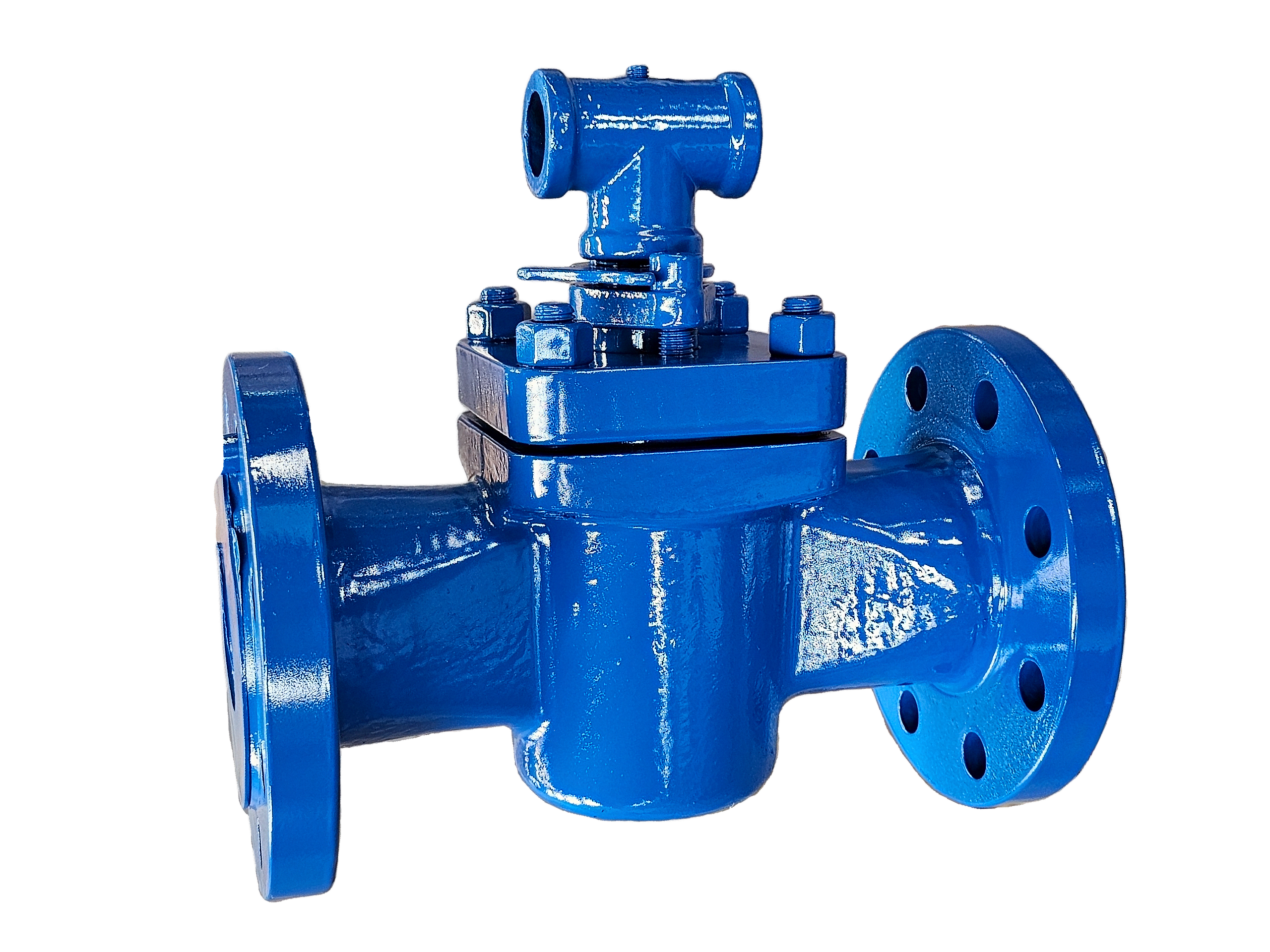
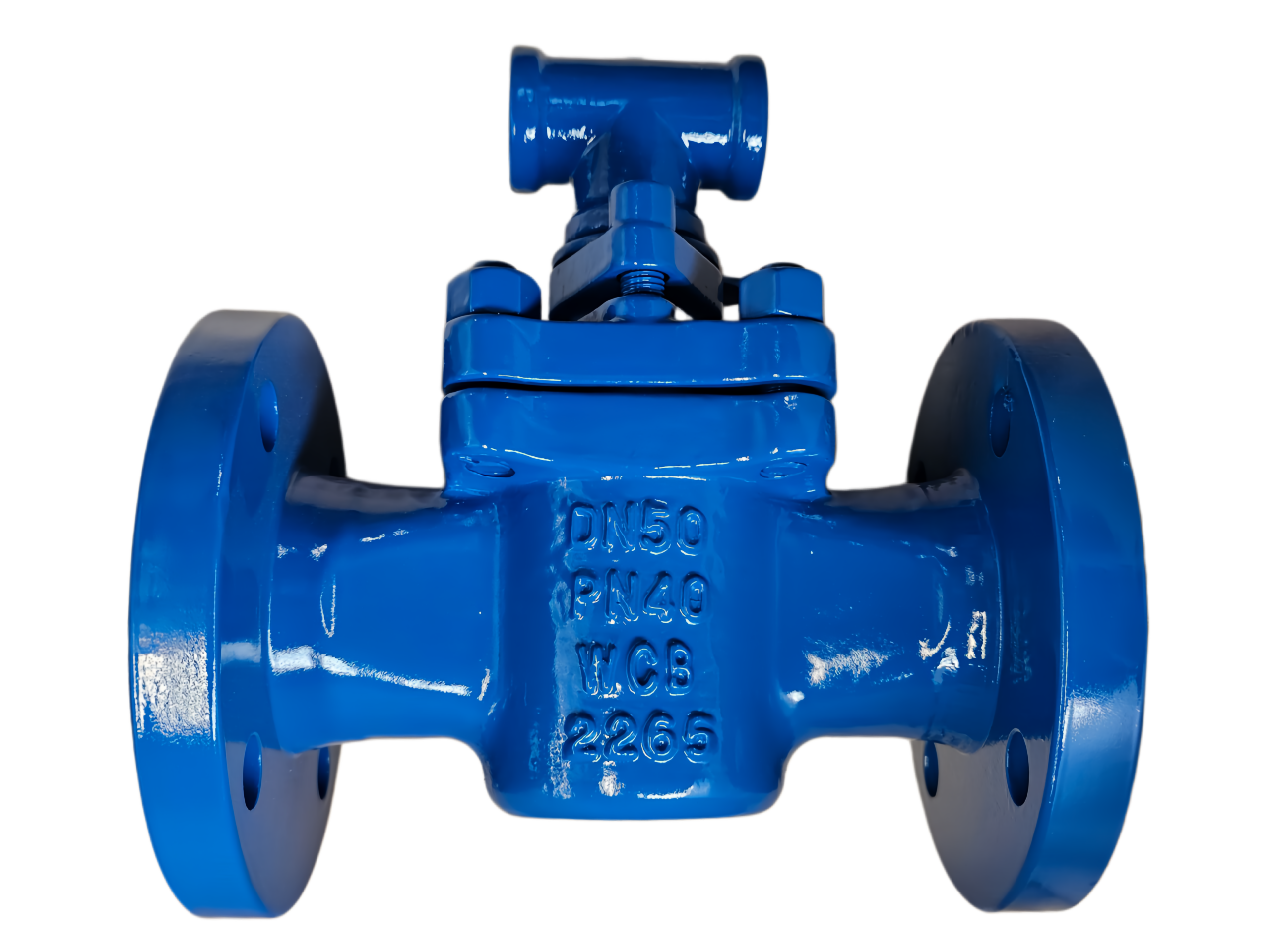

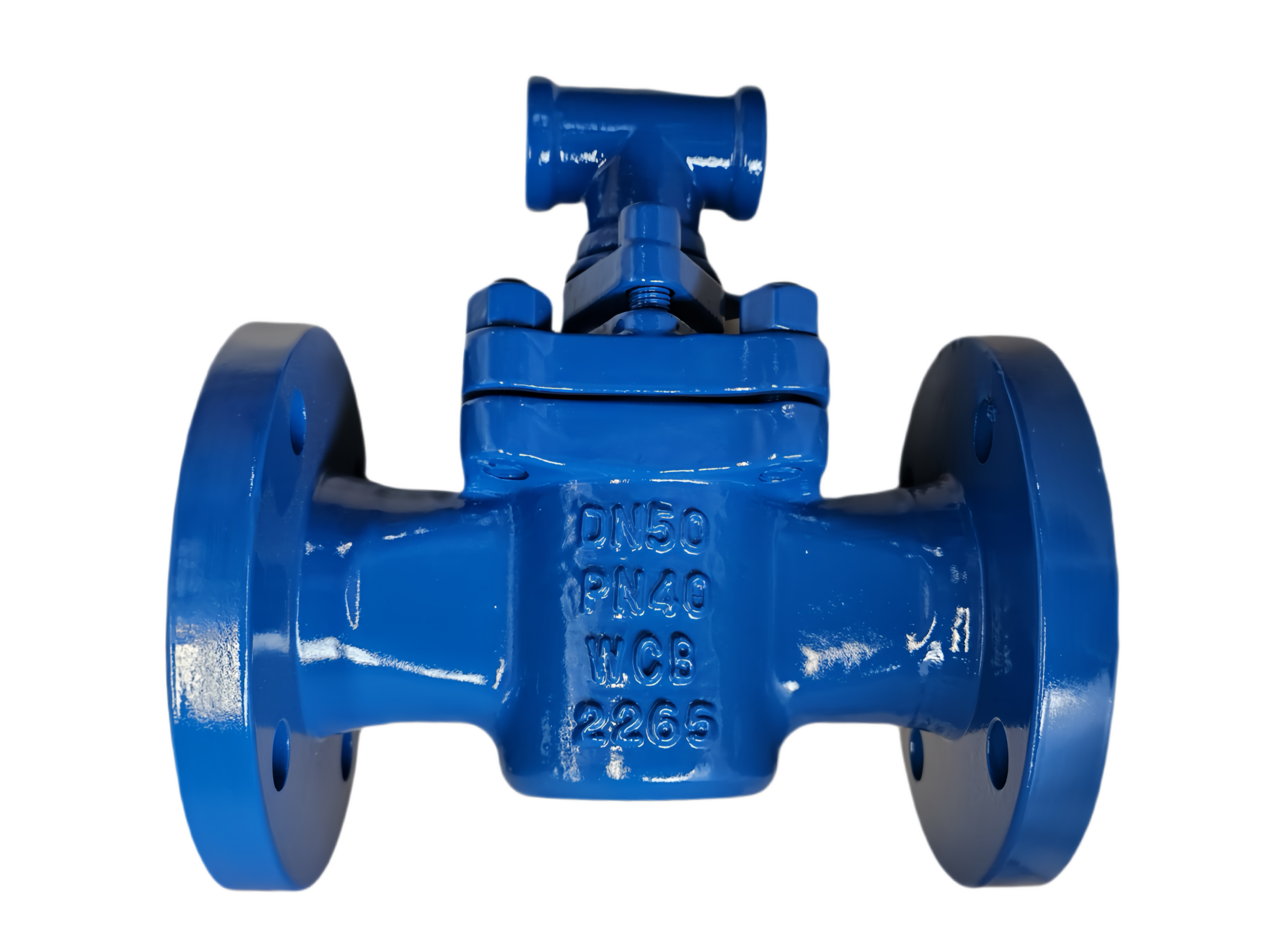
2-Way Lubricated Plug Valve
Description
API 599 / API 6D Lubricated Plug Valve Technical Data Sheet
(Carbon Steel Body, 304 Trim, PTFE Seals, Wrench Operated)
1. Product Overview
| Item | Description |
|---|---|
| Product Type | Lubricated Plug Valve / Non-Lubricated Plug Valve (Sleeved Type) |
| Design Standard | API 599 (Metal Plug Valves – Flanged, Threaded, and Welding Ends) API 6D (Pipeline Valves) |
| Body Material | Carbon Steel (ASTM A216 WCB / A105) |
| Trim Material | 304 Stainless Steel (Plug, Stem, Seats) |
| Sealing Material | PTFE (Polytetrafluoroethylene) – for sleeve / seat seals |
| Operation | Wrench Operated (Lever / T-bar) |
| Connection Type | Flanged Ends (RF / RTJ) |
| Nominal Size | NPS 1/2″ ~ 24″ (DN15 ~ DN600) |
| Pressure Class | Class 150 ~ Class 300 (Class 600 available on request) |
| End Flanges | ASME B16.5 (RF / RTJ) |
| Face-to-Face Dimensions | ASME B16.10 / API 6D (Long pattern or Short pattern) |
| Testing Standard | API 598 / API 6D / ISO 5208 |
| Fire-Safe Design | API 607 / API 6FA (optional) |
| Anti-Static Device | Yes (per API 6D) |
| Blowout-Proof Stem | Yes |
2. Applicable Standards & Specifications
| Item | Standard |
|---|---|
| Design & Manufacturing | API 599 (Metal Plug Valves), API 6D (Pipeline Valves), ASME B16.34 |
| Face-to-Face Dimensions | ASME B16.10, API 6D |
| Flange End Dimensions | ASME B16.5 (RF / RTJ) |
| Butt-Weld Ends | ASME B16.25 (if applicable) |
| Pressure-Temperature Rating | ASME B16.34 |
| Material Requirements | ASTM A216 WCB (Body), ASTM A182 F304 (Trim) |
| NACE Requirements | NACE MR0175 / ISO 15156 (optional for sour service) |
| Testing & Inspection | API 598, API 6D, ISO 5208 |
| Fire-Safe Test | API 607, API 6FA (optional) |
| Low Emission Requirements | ISO 15848, TA-Luft (optional) |
3. Main Technical Parameters
| Item | Parameter Range / Description |
|---|---|
| Pressure Class | Class 150, Class 300 (Class 600 available on request) |
| Shell Test Pressure | 1.5 x Rated Working Pressure (per API 598) |
| Seat Test Pressure (High Pressure) | 1.1 x Rated Working Pressure (per API 598) |
| Seat Test Pressure (Low Pressure) | 40 ~ 80 psi (per API 6D) |
| Applicable Media | Water, Oil, Natural Gas, Air, Non-aggressive Chemicals, etc. |
| Working Temperature | -29°C ~ +120°C (PTFE seals) Higher temperatures available with alternative seat materials |
| Structure Type | Lubricated Plug / Non-Lubricated Sleeved Plug |
| Port Type | Full Port / Regular Port / Venturi Port |
| Flow Direction | Bidirectional (standard) |
| Leakage Class | API 598 / ISO 5208 Rate A (Zero detectable leakage) |
| Operation | Wrench Operated (Lever / T-bar) – Suitable for smaller sizes and lower torques |
| Wrench Type | Lever handle (with locking device optional) / T-bar handle |
| Position Indication | Lever position indicates open/closed (90° operation) |
| Fire-Safe Design | Optional per API 607 |
| Anti-Static Device | Springs between plug and stem / body ensure electrical continuity (<10 ohms) |
| Blowout-Proof Stem | Stem designed with integral collar to prevent ejection under pressure |
| Cavity Relief | Automatic cavity pressure relief (self-relieving) |
4. Material of Construction
4.1 Standard Material Specifications
| Part Name | Material | Specification / Notes |
|---|---|---|
| Body | Carbon Steel | ASTM A216 WCB (cast) or ASTM A105 (forged for smaller sizes) |
| Bonnet / Cover | Carbon Steel | ASTM A216 WCB / A105 |
| Plug | 304 Stainless Steel | ASTM A182 F304 / CF8 (cast) – Hard chrome plated optional |
| Stem | 304 Stainless Steel | ASTM A182 F304 |
| Seat / Sleeve | PTFE (Virgin / Reinforced) | Molded or machined PTFE sleeve (for non-lubricated type) |
| Body Gasket | PTFE / Spiral Wound 304+Graphite | PTFE for standard service; Spiral wound for higher temp |
| Stem Seals | PTFE / Viton / Graphite | PTFE standard; Viton for higher temp |
| Thrust Washer | PTFE / Bronze | Prevents metal-to-metal contact |
| Gland / Adjuster | Carbon Steel / 304 SS | For packing adjustment |
| Bolting (Studs/Nuts) | A193 B7 / A194 2H | Carbon steel bolting |
| Handle / Wrench | Malleable Iron / Fabricated Steel | Epoxy coated or galvanized |
| Anti-Static Device | 304 Stainless Steel springs/balls | Between plug-stem and stem-body |
4.2 Optional Materials
| Part | Material Option | Application |
|---|---|---|
| Body | ASTM A352 LCB / LCC | Low temperature service (-46°C) |
| Plug | 316 Stainless Steel / Duplex / Monel | Corrosive service |
| Stem | 316 Stainless Steel / 17-4 PH / Monel | Corrosive / high strength |
| Seat / Sleeve | Reinforced PTFE (R-PTFE) / UHMWPE / PEEK | Higher pressure / temperature |
| Stem Seals | Viton / Graphite / PTFE blends | Higher temperature / chemical resistance |
5. Structural Features & Working Principle
5.1 Design Features
| Feature | Description |
|---|---|
| API 599 / API 6D Compliant | Designed, manufactured, and tested in full compliance with API 599 (plug valve specific) and API 6D (pipeline valve) standards, ensuring reliability in critical service . |
| Carbon Steel Body | ASTM A216 WCB carbon steel body provides excellent strength, toughness, and cost-effectiveness for general industrial and pipeline applications . |
| 304 Stainless Steel Trim | Plug and stem manufactured from 304 stainless steel offer superior corrosion resistance compared to carbon steel trim, ensuring long service life and smooth operation . |
| PTFE Sealing | PTFE sleeve (for non-lubricated type) or PTFE seat inserts provide bubble-tight sealing, low operating torque, and excellent chemical resistance . |
| Wrench Operation | Lever or T-bar handle provides direct 90° operation for quick open/close; suitable for smaller sizes (typically up to NPS 6-8 depending on torque) . |
| Floating Plug Design | Line pressure forces the plug against the downstream seat, enhancing seal tightness (pressure-energized) . |
| Bidirectional Flow | Standard design allows installation in either flow direction without modification . |
| Anti-Static Device | Springs between plug and stem, and between stem and body, ensure electrical continuity (<10 ohms resistance), preventing spark generation in flammable environments . |
| Blowout-Proof Stem | Stem is retained by the bonnet/cover with integral collar, preventing stem ejection under pressure . |
| Self-Relieving Cavity | Plug design allows cavity pressure to self-relieve to line pressure, preventing over-pressurization . |
| Locking Device | Optional locking arrangement on handle allows valve to be locked in open or closed position . |
5.2 Working Principle
-
Closed Position: Plug rotated 90° such that the port in the plug is perpendicular to the flow path. The PTFE sleeve/seat provides bubble-tight seal.
-
Opening: Rotating the wrench 90° aligns the plug port with the flow path, allowing full flow.
-
Sealing: Line pressure forces the plug against the downstream seat (pressure-energized), enhancing seal tightness as pressure increases.
-
Lubrication (Lubricated Type) : For lubricated plug valves, sealant injected into the valve body coats the plug and seat, providing sealing and reducing operating torque.
6. PTFE Seal Features
| Property | Description |
|---|---|
| Material | Virgin PTFE / Reinforced PTFE (R-PTFE) / Glass-Filled PTFE |
| Temperature Range | -29°C ~ +120°C (Virgin PTFE) -29°C ~ +150°C (Reinforced PTFE) |
| Pressure Rating | Full Class 150/300 rating within temperature limits |
| Chemical Resistance | Excellent resistance to most chemicals, acids, and solvents |
| Friction Coefficient | Very low (0.05-0.10) – provides smooth operation and low torque |
| Sealing Performance | Bubble-tight shut-off (ISO 5208 Rate A / API 598) |
| Seat Design | Moulded or machined sleeve fully lined in body; or separate seat inserts |
7. Wrench Operation Details
| Feature | Description |
|---|---|
| Operation Type | Direct-mounted lever or T-bar wrench |
| Rotation Angle | 90° (quarter-turn) from fully open to fully closed |
| Position Indication | Handle position indicates valve status: – Handle parallel to pipe = OPEN – Handle perpendicular to pipe = CLOSED |
| Torque Capacity | Suitable for valves up to certain size/torque; gear operator recommended for larger sizes or higher pressure classes |
| Locking Device | Optional pin or latch to lock handle in open/closed position |
| Handle Material | Malleable iron / fabricated steel (epoxy coated or galvanized) |
| Handle Length | Designed to provide adequate mechanical advantage for manual operation |
| Optional Features | Padlockable handle, chainwheel attachment, extension stem for buried service |
8. Dimensional Data
Note: Dimensions are for reference only. Final dimensions vary by manufacturer, pressure class, and port type. Consult GA drawing for final approval.
8.1 Face-to-Face Dimensions (L) – ASME B16.10 / API 6D (Long Pattern)
| NPS | DN | Class 150 (mm) | Class 300 (mm) | Class 600 (mm)* |
|---|---|---|---|---|
| 1/2″ | 15 | 108 | 152 | 165 |
| 3/4″ | 20 | 117 | 178 | 190 |
| 1″ | 25 | 127 | 203 | 216 |
| 1-1/4″ | 32 | 140 | 216 | 229 |
| 1-1/2″ | 40 | 165 | 229 | 241 |
| 2″ | 50 | 178 | 267 | 292 |
| 2-1/2″ | 65 | 190 | 292 | 330 |
| 3″ | 80 | 203 | 318 | 356 |
| 4″ | 100 | 229 | 356 | 432 |
| 6″ | 150 | 394 | 444 | 559 |
| 8″ | 200 | 457 | 533 | 660 |
| 10″ | 250 | 533 | 622 | 787 |
| 12″ | 300 | 610 | 711 | 838 |
| 14″ | 350 | 686 | 838 | 889 |
| 16″ | 400 | 762 | 864 | 991 |
| 18″ | 450 | 864 | 978 | 1092 |
| 20″ | 500 | 914 | 1016 | 1194 |
| 24″ | 600 | 1067 | 1168 | 1397 |
** Class 600 available on request; consult manufacturer for availability and dimensions.*
8.2 Overall Dimensions (Approximate) – Wrench Operated
| NPS | DN | Class 150 | Class 300 | ||
|---|---|---|---|---|---|
| Height (H) mm | Handle Length (mm) | Height (H) mm | Handle Length (mm) | ||
| 1/2″ | 15 | 150 | 120 | 160 | 120 |
| 3/4″ | 20 | 160 | 120 | 170 | 120 |
| 1″ | 25 | 180 | 150 | 190 | 150 |
| 1-1/4″ | 32 | 200 | 150 | 210 | 150 |
| 1-1/2″ | 40 | 220 | 200 | 230 | 200 |
| 2″ | 50 | 250 | 200 | 270 | 200 |
| 2-1/2″ | 65 | 280 | 250 | 300 | 250 |
| 3″ | 80 | 310 | 250 | 330 | 250 |
| 4″ | 100 | 350 | 300 | 380 | 300 |
| 6″ | 150 | 450 | 400 | 500 | 400 |
| 8″ | 200 | 550 | 500 | 600 | 500 |
Note: For sizes above NPS 8, gear operator is typically recommended due to higher operating torque.
8.3 Flange Dimensions (ASME B16.5 Class 150/300 RF)
| NPS | DN | Class 150 | Class 300 | ||||
|---|---|---|---|---|---|---|---|
| Flange OD (mm) | Bolt Circle (mm) | Bolt Holes | Flange OD (mm) | Bolt Circle (mm) | Bolt Holes | ||
| 1/2″ | 15 | 90 | 60.3 | 4-5/8″ | 95 | 66.7 | 4-5/8″ |
| 3/4″ | 20 | 100 | 69.9 | 4-5/8″ | 115 | 82.6 | 4-3/4″ |
| 1″ | 25 | 110 | 79.4 | 4-5/8″ | 125 | 88.9 | 4-3/4″ |
| 1-1/4″ | 32 | 115 | 88.9 | 4-5/8″ | 135 | 98.4 | 4-3/4″ |
| 1-1/2″ | 40 | 125 | 98.4 | 4-5/8″ | 155 | 114.3 | 4-7/8″ |
| 2″ | 50 | 150 | 120.7 | 4-3/4″ | 165 | 127.0 | 8-5/8″ |
| 2-1/2″ | 65 | 180 | 139.7 | 4-3/4″ | 190 | 149.4 | 8-3/4″ |
| 3″ | 80 | 190 | 152.4 | 4-3/4″ | 210 | 168.3 | 8-7/8″ |
| 4″ | 100 | 230 | 190.5 | 8-3/4″ | 255 | 200.2 | 8-7/8″ |
| 6″ | 150 | 280 | 241.3 | 8-7/8″ | 320 | 269.9 | 12-7/8″ |
| 8″ | 200 | 345 | 298.5 | 8-7/8″ | 380 | 330.2 | 12-1″ |
| 10″ | 250 | 405 | 362.0 | 12-1″ | 445 | 387.4 | 16-1-1/8″ |
| 12″ | 300 | 485 | 431.8 | 12-1-1/8″ | 520 | 450.9 | 16-1-1/4″ |
9. Testing & Inspection (Per API 598 / API 6D)
| Test Type | Test Medium | Test Pressure | Duration | Acceptance Criteria |
|---|---|---|---|---|
| Shell Test (Hydrostatic) | Water (with corrosion inhibitor) | 1.5 x Rated Pressure | NPS ≤ 2″: 15 sec NPS 2.5-6″: 60 sec NPS 8-18″: 120 sec |
No visible leakage through pressure boundary |
| Seat Test (High Pressure) | Water / Air (optional) | 1.1 x Rated Pressure | Same as above | No visible leakage through seat |
| Seat Test (Low Pressure) | Air / Nitrogen | 40-80 psi (2.8-5.6 bar) | Same as above | Bubble-tight (zero bubbles) |
| Backseat Test | Air / Nitrogen | Rated Pressure | 15-30 sec | No leakage past stem seals |
Optional Tests:
-
NDT (Non-Destructive Testing): UT, MT, PT on body/bonnet
-
PMI (Positive Material Identification) on all pressure-containing parts
-
Fire-safe test per API 607
-
Low emission test per ISO 15848
-
NACE MR0175 / ISO 15156 material verification
-
Hydrostatic test with traceable chart recorder
10. Installation, Operation & Maintenance Instructions
10.1 Pre-Installation
-
Remove protective covers from flanges .
-
Clean valve interior to remove any debris, oil, or preservatives .
-
Verify pressure class, material, and trim match service requirements .
-
Check wrench operation (full 90° open/close) to ensure smooth movement .
-
Inspect flange faces and RTJ grooves (if applicable) for damage .
10.2 Installation
-
Ensure pipeline is clean and free from debris, weld slag, and scale .
-
Install valve with wrench handle in accessible position .
-
Flow direction: Bidirectional – valve can be installed in either direction .
-
Use appropriate gaskets (spiral wound for RF, ring joint for RTJ flanges) .
-
Support piping adequately to avoid stress on valve flanges .
-
Tighten flange bolts evenly in crisscross pattern to recommended torque .
-
For buried service, consider extension stem and valve box .
10.3 Operation
-
Opening: Rotate wrench 90° counter-clockwise (typically) until handle is parallel to pipe .
-
Closing: Rotate wrench 90° clockwise until handle is perpendicular to pipe .
-
Position Indication: Handle position clearly indicates valve status .
-
Do not use pipe extensions or hammers on wrench for additional leverage .
-
For valves with higher torque (larger sizes), consider gear operator .
-
Locking: Optional locking device can secure valve in open/closed position .
10.4 Maintenance
-
Periodic Inspection:
-
Check for external leakage (body joints, stem seals) .
-
Verify smooth operation – cycle valve periodically to prevent sticking .
-
Check handle and locking mechanism .
-
-
Packing Adjustment:
-
If slight stem leakage occurs, evenly tighten gland nuts .
-
Do not overtighten .
-
-
Seat Replacement (Non-Lubricated Sleeved Type) :
-
Depressurize valve completely before disassembly .
-
Remove bonnet/cover bolts and lift bonnet/stem/plug assembly .
-
Remove worn PTFE sleeve/seats .
-
Install new PTFE sleeve/seats (OEM recommended) .
-
Reassemble and torque bonnet bolts to specification .
-
Retest valve per API 598 before returning to service .
-
-
Lubrication (Lubricated Type) :
-
Inject fresh sealant through lubricant fittings as recommended .
-
Cycle valve after lubrication to distribute sealant .
-
-
Spare Parts: Recommended spare parts include PTFE sleeve/seats, stem seals, gaskets, and handle components .
11. Ordering Information
When ordering API 599 / API 6D Plug Valves (Carbon Steel, 304 Trim, PTFE Seals, Wrench Operated), please specify:
| Item | Description |
|---|---|
| 1. Valve Type | Plug Valve (Lubricated / Non-Lubricated Sleeved) |
| 2. Design Standard | API 599 / API 6D |
| 3. Nominal Size | NPS ___ (DN ___) |
| 4. Pressure Class | Class 150 / Class 300 / Class 600 |
| 5. Body Material | ASTM A216 WCB (Carbon Steel) |
| 6. Trim Material | 304 Stainless Steel (Plug, Stem) |
| 7. Seat / Sleeve Material | PTFE (Virgin / Reinforced) |
| 8. Connection Type | Flanged (RF / RTJ) per ASME B16.5 |
| 9. Port Type | Full Port / Regular Port / Venturi Port |
| 10. Operation | Wrench Operated (Lever / T-bar) |
| 11. Face-to-Face Standard | ASME B16.10 / API 6D (Long Pattern / Short Pattern) |
| 12. Special Requirements | – Fire-Safe Design (API 607 / API 6FA) – NACE MR0175 / ISO 15156 compliance – Anti-Static Device (standard) – Locking Device on handle – Low Emission Packing (ISO 15848) – NDT (UT/MT/PT) requirements – PMI testing – Special painting / coating |
| 13. Quantity | ___ units |
12. Available Options
| Option | Description |
|---|---|
| Fire-Safe Design | Per API 607 / API 6FA – secondary metal-to-metal seal activates if PTFE is destroyed |
| NACE Compliance | Materials certified per NACE MR0175 / ISO 15156 for sour service |
| Low Temperature Service | Body material ASTM A352 LCB/LCC, impact testing at -46°C |
| Gear Operator | For larger sizes or higher torque requirements |
| Chainwheel Operation | For overhead installation |
| Extension Stem | For buried service or insulated piping |
| Locking Device | Padlockable handle for safety lockout/tagout |
| Position Indicator | Additional visual or remote position indication |
| Oxygen Cleaning | For oxygen service – special cleaning and packaging |
| Special Coatings | Epoxy, zinc-rich, or other coatings per project specification |
Note: This technical data sheet is a general guideline for API 599 / API 6D Plug Valves with Carbon Steel Body, 304 Stainless Steel Trim, PTFE Seals, and Wrench Operation. For specific project requirements, including detailed material selection, pressure class, and dimensions, please refer to the approved manufacturer’s drawing and purchase order. Specifications are subject to change without notice.
